Originally posted at ouhos.org, the now-discontinued blog of the OU History of Science Collections. Neither this post nor any of its content should be taken as an official communication of the University of Oklahoma.
Camille Flammarion, L’Atmosphere: Météorologie Populaire (Paris, 1888), p. 163. Colorized by Susanna J. Magruder. Courtesy History of Science Collections, University of Oklahoma Libraries. Download: jpg | tiff
More than a decade ago, in 1996, I prepared a small website telling the story of the above woodcut and tracing its first appearance to Camille Flammarion in 1888. That old website remains available, largely unchanged: “This is not a medieval woodcut.” It explores the image as visual rhetoric, concluding that its enduring appeal lies not so much in the flat Earth myth but as an icon of our common quest of discovery and exploration, the challenge of “boldly going where no one has gone before.”
Many colorized versions of the woodcut appear on that site in low resolution, with permission and according to fair use. However, wouldn’t it be great if there were a colorized version available in higher resolution which educators and anyone could freely use? This is why my daughter, Susanna J. Magruder, created the colorized version of Flammarion’s woodcut shown above, which she is distributing with a CC-by license. Enjoy! You can put it on your website, a t-shirt, a coffee mug, or print out a copy on quality paper for your wall.
I’ve already taken advantage of Susanna’s work by using her version as the icon for my spring 2014 course, “History of Science from Antiquity to the Age of Newton,” which will be available on OU’s Janux digital course platform. It’s already announced there, so take a look (and watch the course overview video, if you’re curious). To me, this woodcut is the ideal icon for the course, and I used it before for the same purpose.
If you’re interested in the longer story of the shape of the Earth, here is a 45-minute video I made some years ago that features the woodcut.
Update 3/30/2014: In a post called Faith in the Dark, Ben has written a brief paragraph on each line of the creed, each as imaginative and insightful as they are concise.
——————-
At the Faith and Theology blog, Ben Myers has released videos of 9 sermons which offer a remarkable 4-hour series of reflections introducing the Apostles’ Creed. See the videos all together at youTube, or together with brief descriptions at F&T.
I believe in God the Father, Almighty, Maker of heaven and earth;
And in Jesus Christ, his only begotten Son, our Lord;
Who was conceived by the Holy Ghost, born of the Virgin Mary;
Suffered under Pontius Pilate; was crucified, dead and buried: He descended into hell;
The third day he rose again from the dead;
He ascended into heaven, and sits at the right hand of God the Father Almighty;
From thence he shall come to judge the quick and the dead;
I believe in the Holy Ghost;
I believe in the holy catholic church: the communion of saints;
The forgiveness of sins;
The resurrection of the body;
And the life everlasting. Amen.
We saw the film Jobs this afternoon at the Warren Theater (imdb, trailer). Here’s the good, the bad and the ugly.
The Good. Ashton Kutcher is great as Steve Jobs; I found him believable (except for the affected gait). I was looking forward to watching him give the Stanford commencement speech, which clearly inspired his recent teen choice award acknowledgments. The entire casting is excellent. I am old enough to have lived through this history and at the time was passionate about the emergence of personal computing, regarding Jobs as its quintessential spokesman. My sense of nostalgia was fully awakened by the recreations of 70’s culture, from Bob Dylan and Cat Stevens to the West Coast Computer Faire. The sight of Woz and others soldering a circuit board brought back memories of building my own Heathkit shortwave ham radio, on which I saw the world shrink as I tapped out conversations in Morse code. And then the 1984 commercial appears, as it should. There are many other small details that are well done, even if they are not enough to recommend the film before it’s out on Netflix.
The Bad. There’s no apparent sense of selection. Context is missing. Essential information is omitted. Pacing and a sense of lapsing time is utterly absent. One example will suffice: only a hard cut, an eye-blink, spans the half-dozen years from the launch of the Macintosh to the debut of Windows in beta. From this film alone one might suppose that Jobs’ phone call to Gates protesting Windows happened practically the following morning – unless one happens to know the history involved (which is now ancient history to most viewers, I suspect).
Many details are plain wrong. For example, Steve Jobs would never have said that people bought the Macintosh to show they had bravado and to show off their social status. I look forward to hearing participants in these events chime in with their corrections, like Danniel Kottke and Bill Fernandez at Slashdot. But the film has definitely caused me to want to re-read Andy Herzfield’s Revolution in the Valley and re-visit its companion folklore.org website. The bad can be corrected; not so the film’s deeper flaws, for the screenwriting is downright ugly.
The Ugly. How bad is a film that emphasizes the importance of getting fonts right on the 1984 Mac if the film itself uses terrible fonts? With that kind of aesthetic disconnect in production, is it any wonder if the script writing was awful?
There are two dramatic stories well worth telling in the story of Jobs: the personal story of Steve Jobs, and the technology story of the digital revolution and the information age. Yet neither story was understood by the scriptwriters. Neither is told in a coherent way, nor are they effectively interwoven. Without deep understanding, the scriptwriters were left to string anecdotes together into a plot line that careened between various superficial aspects of either story without capturing an intelligible sense of either one. The result is a film that is cold and uncompelling, where it could have been an unforgettable human drama. This is the movie equivalent of Walter Isaacson’s deeply flawed biography (per John Siracusa, John Gruber).
First, the technology story: The film begins with the unveiling of the iPod, before flashing back to the young Jobs. Yet the iPod never appears again, so this forward reference was wasted. The film ends abruptly on Jobs’ return to Apple, before the launch of the iMac. The scriptwriters found time to devote several minutes to the firing of Apple board members when Jobs returned to Apple, missing the opportunity to explore the technological story of how Job’s return was more a triumph of NeXT than a triumph of personal vengeance. Indeed, the film portrays no understanding whatsoever of the significance of Jobs’ intervening years for either the NeXT operating system nor Pixar.
It’s the same with the human story: To devote the closing minutes of the film to portraying what appears to be petty personal vengeance by Jobs also misses the opportunity to explore Jobs’ personal story, leaving his character unchanged from his early years. Understand me here: I’m not criticizing the film for portraying Jobs as an asshole; I’m critiquing it for not showing any character development, for not being a compelling human story. A man as complex as Jobs deserves better. Viewers should expect better.
This would have been the cure: Instead of the unveiling of the iPod, the film should have begun with the lines from Jobs’ Stanford commencement address about how being fired from Apple was the single best thing that had ever happened to him (about 7 minutes in):
“I didn’t see it then, but it turned out that getting fired from Apple was the best thing that could have ever happened to me. The heaviness of being successful was replaced by the lightness of being a beginner again, less sure about everything. It freed me….”
There’s no congruence between the man who said that and the script Kutcher was given, between those lines and the way the film now ends. Yet to have begun with those lines would have framed both stories in a compelling way, bringing both the personal and the technological stories, after exploring the mystery of suffering during the in-between years, to a combined resolution in Jobs’ return to Apple. To then flash forward to Kutcher delivering a compressed version of the Stanford speech while the credits roll would have been inspirational, but the Stanford speech is not mentioned in the film at all.
To my friends, I say that, instead of watching this 2-hour biopic, you will gain a much more compelling and accurate sense of the human drama and technological accomplishments of Steve Jobs by watching the less-than-15-minutes Stanford commencement address. Bring out the pop-corn and watch that several times, and you’ll have spent your evening in a much more enjoyable and thought-provoking way. And if you really want the history, go to folklore.org.
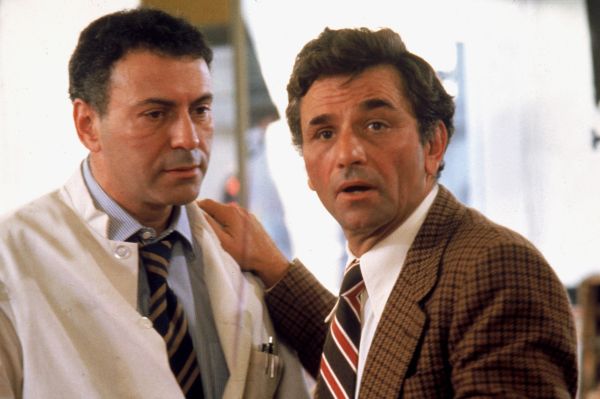
I knew I was among family a week ago when I responded to a comment about how large the insects are growing this summer by saying something about tsetse flies carrying off babies, when those around the room erupted with an extended series of one-liners from The In-Laws! They caught the reference instantly, and love that Peter Falk classic as much as I do. I felt entirely at home. Then, a couple nights ago, Candace and Susanna and I watched again, for the upteenth time, How To Steal A Million. That favorite romantic comedy again had us laughing all the way through, with repartee like “You’re the boss. Just do what I tell you.”
On Facebook and elsewhere one is sometimes asked to list one’s favorite movies. We are not movie watchers, and we’re always behind the times when it comes to talking with friends about current releases. But we enjoy some movies very much, so I thought I’d go ahead and start a list of them here, in no particular order. If you are as out-of-date and idiosyncratic as us, it might be worth reading for you, but mainly it’s for my own benefit. And it’s off-the-cuff; I’ll revise and update it from time to time. These films are not obscure, so there’s no need for me to comment or elaborate. Links are to imdb.
Do you like any of these, too? What are your favorite movies? What should someone who likes these watch next? Leave suggestions in the comments.
After playing a pivotal role in our Oklahoma reading group, Matthew Dowling took up a pastorate at Monmouth Church of Christ in Tinton Falls, NJ. Not surprisingly, he has now started a Monday morning Barth reading group there (as well as a Bonhoeffer book club).
Even more notably, Matthew has decided to blog his way through the Church Dogmatics in a year! Check out his index of CD blog posts and follow along with him as he goes — or join him in reading the CD at your own pace and leisure:
Although reading through the entire Church Dogmatics in a single year might seem ambitious (at first glance), to me it is above all an affirmation of humility in the life-long quest to know God more deeply. Surely few would disagree that the Church Dogmatics is worth reading through more than once in a lifetime, for anyone interested in modern Trinitarian theology. Just as Flannery O’Connor returned to reading Thomas’ Summa over again throughout her life, so it makes sense for us to inhabit the magnum opus of the Thomas of the 20th century. And if the goal is to “listen long,” why not start off with a quick read to survey the lay of the land? As Rick Steves urges first-time and experienced travelers alike, “expect to return!”
To kick off this Barth series, Matt sets some context with two related posts:
Princeton Theological Seminary “Barth in Dialogue” Conference Report
Matthew, your quest is inspiring. We wish you and your reading group all the best, and look forward to hearing of your progress confident of the encouragement your efforts will bring to many.
Her first movie is “Arwen’s vigil,” a Lord of the Rings fan video. Watch it and see if you agree with me that it offers a very moving account of Arwen’s story:
The beautiful song “Arwen’s vigil” is by The Piano Guys (). If you like Susanna’s video, buy their album and check out their YouTube channel.
“I was unhappy for a long time, and very lonesome, living with my grandmother. Then it was that books began to happen to me, and I began to believe in nothing but books and the wonderful world in books — where if people suffered, they suffered in beautiful language, not in monosyllables, as we did in Kansas.” (Wikipedia)
Chronic illness defers dreams. This is my 4th day sitting or lying on the couch ill and completely unproductive. Saturday was a bad eye day (like many over the last month). Thankfully, I got over it, but immediately came down with my trademark “cold” or upper respiratory infection that utterly wipes me out, leaving me short of breath and mentally stupefied. What a bummer being sick, when there’s not even solace in books. Hold fast to dreams.
—–
“Where there is no vision, the people perish…” (Proverbs 29:18) “And Jesus answered him, ‘It is written, “Man shall not live by bread alone.”‘” (Luke 4:4)
Hughes reminds me that I always need to ask myself the question, What are my dreams?
Our dreams define us more than external forces ever can:
“When you’ve got a dream like mine,
nobody can take you down…” (Bruce Cockburn)
For me, illness prompts their reassessment. Do I have dreams like that?
The question What are my dreams? remains always new. It’s much larger than setting goals — actually, it’s about love. To ask it continually is to sustain constant dialogue with the world around me. To ask it continually is not to neglect friendship with those I love. If “work is love made visible,” then dreams are the magic, the energy and the means, which transmute hidden love into visible work that I may share with others.
In “The Weight of Glory,” a masterful essay in the book of the same name, Lewis wrote: “Our Lord finds our desires not too strong, but too weak. We are half-hearted creatures, … far too easily pleased.”
When ill in particular, I must hold fast to dreams.
Let us pray for strength to hold fast to our dreams and love one another.
—–
Hold fast to dreams For if dreams die Life is a broken-winged bird That cannot fly.
We’re gathered together watching the weather news, being “weather aware,” as we say in Oklahoma. Since the girls were young we’ve enjoyed Gary England and News9. The storm tracking radars in central Oklahoma have amazing precision, and the human storm chasers are always ahead of the storm to keep us advised. But tonight, instead of wondering whether we should have sought shelter at the University, we are enjoying comfy seats in our own family room, playing Oklahoma Severe Weather Bingo (made in Guthrie by Rachel O’Donnell, sold on Etsy at a bargain for only $13).
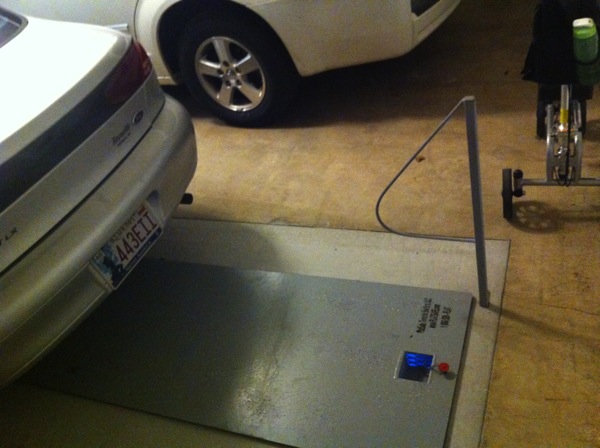
The reason we’re relaxed and comfy in our own home, instead of seeking shelter elsewhere, is because we installed a storm shelter in the floor of our garage earlier this year.
We chose an indoor shelter so that we wouldn’t have to enter it until the last moment, believing that we’ll be more likely to actually use it if it were accessible even during rain and hail.
It’s really easy to enter. We chose the smooth composite fiberglass rather than galvanized steel, so it feels like descending into a bathtub. The light surface seems less oppressive, so it’s not as claustrophobic.
Supposedly it could hold a dozen people in a crunch (literally), but it’s big enough even for company because with an indoor shelter, we won’t have to sit inside for long periods.
Candace prepared a supplies bucket to keep inside the shelter at all times. It contains a radio, emergency chocolate, TP, whistle, hand-held battery-powered fans, a wrench to ratchet open the lid, a deck of cards, eye drops and medicines, and there’s also bottled water and blankets, and magnetic lights on the ceiling.
After quite a bit of research (with help from Robin and Karen!), we chose Flatsafe.com because their in-ground shelters are made of galvanized steel rather than regular steel. But once we visited their store, we ended up choosing the composite and we’re very happy with it. During delivery and installation it developed a couple of cracks, which they completely fixed without hassle. There were no surprises during installation, and no unexpected expenses, so we would feel comfortable purchasing from them again. Below are some photos of the installation.
OK, News9 is saying there’s a tornado on the ground near Goldsby, heading toward Hwy 9 and Noble and OU, so we’re heading to the shelter now…
—–
UPDATE: We’re still here! 🙂
So tonight was our first “real” use of the shelter, and it worked great. We were in it safe and sound before the sirens sounded the alarm.
Susanna found a way to be comfy in the shelter
Even Toby accepted being in the shelter on Mercy’s lap


 , Ben has written a brief paragraph on each line of the creed, each as imaginative and insightful as they are concise.
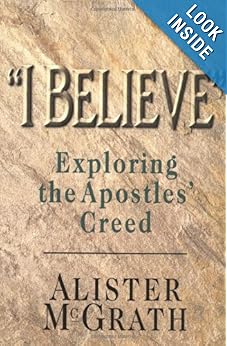 To follow up, here are a few further explorations of the creed:
 (