This past week Apple released Safari 5, which features a non-distracting, ad-blocking reader mode and an overdue but most-welcome support for extensions. Safari 5 also offers a choice of search engines, so although I have no Microsoft software installed on my computer, I have set my default search engine to Bing in protest, as a follow-up to my Google as Big Brother post.
In Google as Big Brother, I wrote that I oppose the Google book settlement, that I support litigation to investigate Google’s wi-fi data harvesting from private networks, and that I was astonished at Google’s lack of class, during their recent developers conference, toward Apple as a competitor.
Google’s mantra, “Don’t be evil,” does not mesh well with the behavior of a company whose primary business is targeted advertising. If so, what motto should they adopt? One motto that comes readily to mind is “Stop being creepy.” This strikes me as particularly apt, after reading a thought-provoking analysis by David Barnard, “Anti-Competitive AND Potentially Creepy.” Google and other analytics companies harvest astonishing quantities of information about users of the iPhone (now iOS) platform, and Apple is taking a lot of heat for recent steps to limit these activities and protect user privacy. Barnard explains,
“If Apple didn’t do this, a year from now a self-conscious woman would look down at her phone and see an ad promoting weightloss products to overweight 41 year old women with thinning blond hair who live in a blue house and drive a black Ford Taurus.”
Who can we trust in this hyper-connected digital environment? Google’s CEO, Eric Schmidt, once asked a skeptic whether he would rather have governments in control of the information Google amasses. Until recently, I think most people trusted Google more than any government, but to place trust in an ad company is naive. (Google is not Darrin Stephens.) Barnard’s killer point is this:
“And I trust Apple in that regard a hell of a lot more than I trust Google, Facebook, etc. The thing is, Apple is a hardware company, that’s where they have and will continue to make their money. Google, Facebook, and others trade in information. The more detailed and specific, the more valuable that information. For Apple, the better the overall experience of the device, the more valuable that device becomes. They can throttle ad targeting and the specificity of 3rd party analytics according to the taste of users.”
One could not hope for a better illustration of the contrasting privacy policies of Apple and Google than the All Things Digitalinterview with Steve Jobs on June 7. 24 minutes into this 90-minute conversation, Walt Mossberg and Kara Swisher grill Jobs about Google. Anyone expecting a combative response from Jobs, similar to the warfare rhetoric voiced by Google executives at their developer conference, would have been disappointed. Jobs demonstrated maturity and class, calmly stating that “just because we’re competing with somebody doesn’t mean we have to be rude” (30 min).
The interview turned to privacy at the 1 hr 9 min mark, when Mossberg noted recent controversies involving Facebook and Google Buzz. Mossberg’s reference to Google’s unauthorized wi fi collection as “inadvertent” drew a laugh from the audience. Jobs remarks over the next several minutes are very interesting, and his animated expression reflects obvious passion for the principles involved. He insisted that Silicon valley is not monolithic in its respect for privacy (or lack thereof), and that Apple thinks different in taking privacy extremely seriously. For example, other mobile platforms do not require applications to ask user permission before obtaining location data. Yet in the iOS, asking permission is not just a rule, because developers might not follow that rule. Rather, apps call location services and the system itself puts up a panel for user approval to ensure that users always understand what an app is doing. Without a curated App Store, this protection of privacy would not be possible. (Similarly, Apple will also curate the distribution of Safari extensions.) Indeed, Jobs emphasized that many of the apps that are rejected from the App Store are refused because they would:
“take your personal data and suck it up into the cloud.” “We worry about stuff like this.” “Privacy means people know what they’re signing up for, in plain English, and repeatedly. That’s what it means.” “Some people want to share more data than other people do. Ask them. Ask them every time. Make them tell you to stop asking them, if they get tired of you asking them. Let them know precisely what you’re going to do with their data. That’s what we think.”
After a brief but poignant affirmation that life is fragile, the discussion turned back to privacy at 1:13. A questioner from the audience asked Jobs whether Apple’s increasing restrictions upon data harvesting suggests that Apple wants to exclusively own the analytics business. Jobs explained that the context for these restrictions arose from Apple’s naiveté about the power of these analytical methods. One day we read in the paper, Jobs recounted, that an analytics firm named Flurry had detected new iPad and tablet devices on the Cupertino campus. Certain apps were sending Flurry user information, including location and device identifiers. “So we said ‘No. We’re not going to allow this. It’s violating our privacy policies, and it’s pissing us off…” So the new restrictions allow analytics solely for the purpose of advertising. The questioner replied that there are other valid uses of user data, such as providing feedback to enable the developer to improve the app. Jobs, quite animated, responded:
“There’s no excuse for them not asking the customer whether it’s appropriate to send that personal, private data to an analytics firm, which they were not doing. And secondly, after we calm down from being pissed off, then we’re willing to talk to some of these analytics firms… but it’s not today!”
The BBC this week is covering how the Galileo museum in Florence has enhanced their Galileo collection: http://news.bbc.co.uk/2/hi/world/europe/10281535.stm
The museum has long had a Galileo finger on display near the entrance — now they have more! A tooth and a second finger have been reunited with the first.
If the cultural practice of venerating relics seems as odd when it is of a scientific as well as a religious figure, then perhaps it’s a good thing that the History of Science Collections of the University of Oklahoma Libraries has an unrivaled collection of Galileo’s books instead (and perhaps a hair or two, who knows). OU has a remarkable collection of Galileo’s books: a complete set of first editions, four of which contain Galileo’s handwriting, including three of his own copies. Collecting Galileo body parts is not within our scope. We welcome academic researchers from around the world, but CSI investigators should go to Florence.
The BBC reporter pointed out that Galileo “pointed the way” to modern science… probably with these very fingers. Now that the Florence museum has more of Galileo’s digits, they’ll need to create an Index of Fingers to go with their index finger. We shall organize a history of science summer school to Florence to investigate – and take a book or two and see if the fingers move in an attempt to write even more notes in our editions that contain his handwriting. While we’re working on a Finding Aid for Galileo’s astronomy, they’re working on a Finding Aid for Galileo’s anatomy. Galileo is universally recognized as a pioneer in many fields — astronomy, physics, engineering, mathematics, etc. — but with this story we now see him as an un-extractable figure in the history of dentistry. And a founder of digital projects in the history of science.
Many thanks to Robin for starting the ball rolling on this hilarious occasion!
Originally posted at ouhos.org, the now-discontinued blog of the OU History of Science Collections. Neither this post nor any of its content should be taken as an official communication of the University of Oklahoma.
This recently-acquired manuscript is a report to the French Ministry of War about methods of encryption, composed circa 1790:
BAROILLET. Rapport du Comité des Fortifications, sur une méthode d’écrire en chiffres et sur l’instrument approprié à cet objet, proposés par le citen Baroillet. [France, c. 1790]
Baroillet presented the Ministry of War with an instrument containing moving parts which he called a Kinographe, accompanied by an explanatory Mémoire. Corrected in the scribe’s hand in many places, this manuscript may be the first draft of the Mémoire. After a short exposition of various methods of encryption, Baroillet proposed a method of date-dependent encryption using the Kinographe for messages sent via semaphore towers. The Committee on Fortifications approved of Baroillet’s Kinographe, but offered no precise description of the Kinographe device which, naturally, had to be kept secret.
Cryptographic material from the French Revolution is very rare, although cryptology played an important role in the diplomatic and military history of the period.
One of the joys of my daily life is Accordance, the premier software platform for study of the Bible and ancient religious texts. Accordance offers a vast digital library at your fingertips, with impressive e-book features (video). But Accordance is a remarkably fast and stable platform that goes far beyond an e-reading environment, for at least two chief reasons:
Bible-focused integration: Accordance integrates all of your modules with biblical texts. The interface is unobtrusive, keeping your focus on the Bible, never distracting from study of the texts. As one reviewer explains, “as we read, we can constantly refer to cross references, parallel passages, maps, timelines, glossaries, background information, charts, relevant commentaries and dictionary entries, lexical aids, and so on, without ever leaving the Bible passage at hand.” Keeping the Bible central is the first principle of Accordance design.
Tagging, data fields and layered texts: Accordance’s powerful, hidden advantage is what you don’t see when you look at the text display. Each module is so much more than an electronic version of the printed title! Understand text layering and tagging and you’ll appreciate how much work goes into producing Accordance versions of any module. Watch this 2-minute explanation of tagging:
Layering structures entire documents and tagging adds metadata to individual words. Layered texts are the reason why, for example, you can target a search to just dictionary entry headings rather than article content or to just image captions rather than descriptions, cutting right to the chase and avoiding superfluous hits when “searching all dictionaries” or “searching all graphical resources,” etc. The first few minutes of the “Accordance for iOS: Searching” video explains layered texts with two examples, the Hebrew Bible and Anchor Yale Bible Dictionary:
Accordance is not just for scholars: Even before the Mac’s current popularity, many scholars who study biblical or ancient texts in the original languages switched to the Mac just to use Accordance because of Accordance’s integrated searching of lexical forms and other advanced features made possible by their tagged texts. Yet Accordance’s Bible-focused integration, tagged texts, and interactive modules like the Atlas and Timeline also make Accordance ideal for those working in English translations. I use Accordance for tasks as various as scholarly study and general Bible reading. And with Accordance for iOS, my modules are available anywhere anytime.
—–Getting oriented——–
Tour: Check out the Accordance Advantage page, and take the Features Tour. On the Tour page, don’t miss the brief video demo’s for the Library, Workspaces, Flex Search, Amplify, Instant Details, Interlinear, Notes, Analytics, Help and any others that interest you. If you prefer, these videos are joined together in the podcast episode One Sweet Suite, a 17-minute overview of the Accordance interface:
Blog: Follow the informative and practical Accordance blog maintained by Accordance developer David Lang and customer support expert Helen Brown. The regular tips on the blog offer an easy way to add incrementally to one’s working knowledge of Accordance. As you interact with Accordance staff like David and Helen, you’ll be amazed at their scholarly expertise. Browse the blog archives, or check out the Accordance User forums for a convenient collation of past tips.
Podcast: Take advantage of hours and hours of easy-going instructional training through the video podcast Lighting the Lamp; subscribe to it at iTunes or browse it on youTube. Episodes for this engaging and insightful video training series are produced by Timothy P. Jenney (aka “Dr. J”). Check out the podcast table of contents and a “Recommended sequence for the new user.” Think of them as a tuition-free Bible study class, and watch them all!
Seminars: See if one of Accordance’s free, hands-on training seminars is coming to a metropolitan area near you! It’s a wonderful opportunity to gain valuable hands-on training, to get to know other Accordance users and to personally meet the friendly people behind the software.
Cost: Accordance will cost from $50 up to several thousands of dollars, depending on the tools and texts you need. The most efficient way to get started with Accordance is to purchase one of the major “Collections” combining many different modules; consider this side-by-side comparison and this video overview. Sooner or later, you’ll probably want no less than the Essential Collection ($500), but there’s no rush. Take your time and invest in the resources you need over several years (see “upgrade path,” below).
Here are three ways to get started with Accordance for (1) General Bible study; (2) General Bible study with a little Greek; and (3) Scholarly study in the original languages:
1. General Bible study
For English-based Bible study, the Bible Study Collection ($200) will get you off to a great start. Add a study Bible if you like, such as the ESV Study Bible. Perhaps the most useful tool for Bible study is a Bible dictionary, and the Bible Study Collection includes two very good ones: Holman Illustrated Bible Dictionary and Eerdmans Dictionary of the Bible. You’ll also want a good commentary series, and the Bible Study Collection includes the excellent Tyndale Bible Commentaries, one of my favorites. As you use these resources, you’ll see how Accordance powerfully integrates all of your commentaries, dictionaries and other modules with your biblical texts, keeping the texts primary as your central focus rather than taking you away from them. Consider adding How to Read the Bible Book by Book. You might wish to individually add additional commentary sets such as the Revised Expositor’s Bible Commentary (not in any Collection, podcast demo). Commentary sets like Tyndale and the Revised EBC make the scriptures more meaningful and are written in a style that is accessible to anyone.
Assume that at some point you will upgrade to the Essential Collection or the Advanced Collection, so plan your purchases so that you don’t prematurely acquire modules separately that are already included in a larger Collection. For example, I highly recommend the Graphics bundle, which consists of the interactive Atlas, a customizable Timeline, and a beautiful PhotoGuide ($169 sold separately, but included in the Essential Collection). The Graphics Bundle by itself justifies the jump to the Essential Collection as soon as possible. When you are able, upgrade to the Essential Collection. Similarly, the excellent IVP Reference Collection, which includes the New Bible Commentary and the IVP Bible Background Commentaries, is included in the Advanced Collection, so it makes sense to defer acquiring it separately and instead apply its cost toward an upgrade to the Advanced Collection. (Watch for sales or attend a seminar and get the seminar discount.)
2. Learn Accordance and “a little Greek” together
A combination of the Accordance Starter Collection ($50) and the Mounce Greek Study System ($160) will be ideal for many first-time Accordance users who want to go deeper into the Bible with Greek word studies.
First, you’ll want your own copy of Accordance, perhaps the Starter Collection ($50), which includes three excellent tools for basic Bible study: a tagged ESV Bible, Eerdmans Bible Dictionary and the IVP New Bible Commentary. Later, when you’re ready to upgrade, the $50 cost of the Starter Collection can be applied toward any other Collection, from Bible Study to Ultimate.
Then the William Mounce bundle offers a great way to plunge deeper into general Bible study while learning Accordance at the same time. The Greek Study System bundle includes a tagged Greek New Testament (GNT-T), Mounce’s Reverse-Interlinear New Testament and Dictionary, Mounce’s Complete Expository Dictionary of Old and New Testament Words, and the “Foundational Greek” 9-hour video series (formerly called the “Biblical Greek Primer” video series). Used in conjunction with the Lighting the Lamp podcast, Mounce’s Greek Study System offers a very relaxed approach to becoming familiar with Accordance’s Greek Bible study tools, without requiring the labors of traditional language study. This 3-minute intro explains how the System works:
The tagged Accordance modules (Mounce’s Reverse-Interlinear New Testament and Dictionary and Mounce’s Complete Expository Dictionary of Old and New Testament Words) are greatly enhanced over the print titles by the same names. The video series includes Accordance screencasts to follow along for interactive learning, practice and review. Perfect for a Sunday School Class or homeschool Bible and language study.
Optional module: Mounce’s Complete Expository Dictionary (included with the Mounce Greek Study System) automatically links into the New International Dictionary of New Testament Theology, Abridged, an excellent optional purchase ($40, not in any Collection).
In contrast to someone who has purchased a hodgepodge of individual modules, beginning users may purchase Collections at substantial savings. Watch the video overview and examine the Collection Comparison chart, paying special attention to the Essential, Advanced and Ultimate Collections. Make it a priority to upgrade on the Collection level instead of purchasing separately any modules included in a Collection. Begin with whichever Collection you can afford, and then over time prioritize upgrading from one Collection to the next, separately acquiring only those modules which are not in any Collection. Attend a seminar if it is at all possible; in addition to the other benefits, you may pick up most modules and buy or upgrade a Collection at a discount.
Starter Collection: $50.
Bible Study Collection: $200, $150 upgrade from Starter.
Original Languages Collection: $300, $250 upgrade from Starter.
Essential Collection: $500. $450 upgrade from Starter; $400 upgrade from Bible Study; $300 upgrade from Original Languages.
Advanced Collection: $1,000; $600 upgrade from Essential.
Ultimate Collection: $2,000; $1,200 upgrade from Advanced. The total cost of upgrading step by step from Starter to Ultimate is $2,400; so you can save $400 by making the Ultimate Collection your initial investment (about enough to cover the cost of the Mounce Greek Study System and the Anchor Yale Bible Dictionary).
In an ideal world the best buy, if you could afford it and if a seminar might be scheduled nearby, would be to get the Starter Collection now (perhaps with the Mounce Greek Study System, as in Option #2 above) and then as soon as opportunity allows purchase the Ultimate Collection with a seminar discount. But no matter where you start, there’s a clear upgrade path and no hurry as you grow into the resources offered with each Collection along the way. Then, over time, add modules not contained in any Collection as they go on sale. Patience will be rewarded.
—–Bottom line——–
Accordance is easy to learn (especially if you follow the blog and the podcast), but it’s rich and powerful enough that you’ll never outgrow it.
—–
Not sure? No worries. There’s a toll-free number at the bottom of every page on the Accordance website. Give them a call – the kind and helpful people who answer the phone are not marketers – they are experienced Accordance users willing to share their thorough knowledge of the entire range of Accordance modules and will give you sound advice, based on your needs, rather than trying to sell you something you’ll end up not using.
Disclaimer: I have never received any financial benefits or complimentary resources from Accordance and do not know any Accordance personnel on a personal level. This page is written not as an advertisement, but because I find myself wanting to explain the same things to friends who become interested in Accordance. The claims and advice offered here are my own and have no sanction from Accordance; take them fwiw.
“A room without books is like a body without a soul.” Cicero
Relationships between persons depend upon the art of listening. Listening to music, poetry, and even works of art is deeply personal. The same is true for books. The act of reading is listening.
Listening is a long art. My friend Shawn mentioned the other day that it takes 5 years of reading to genuinely enter into a relationship with an author. I agree. It’s not that I will read someone for 5 years and then move on, leaving them behind. Rather, after 5 years of steady reading I finally begin to understand an author as another presence accompanying me on the journey. Upon reflection, it’s true to say that I have read for at least 5 years all the writers who now mean the most to me.
Devoted reading of C.S. Lewis occupied me from when I first tackled Mere Christianity in 7th grade to the Space Trilogy by 9th grade and later the Narnia Chronicles in high school. As an undergraduate I was blown away by Till We Have Faces (still one of my five favorite books), and as a graduate student I gratefully drank in the insights of The Discarded Image, An Experiment in Criticism and his other scholarly works. Similarly, after finally reading The Hobbit as a freshman undergraduate (thanks, Lee!), I devoured everything of J.R.R. Tolkien‘s I could find for at least a decade. I re-read The Lord of The Rings every year for five (or was it six?) years in a row, before I could move on with a sense of his lingering presence. Even then, my wife Candace and I began reading The Lord of the Rings aloud on our honeymoon, and we later read it aloud several times with our daughters.
Lewis and Tolkien thus became eternal companions, friends who have shaped my way of being forevermore. I cannot imagine who I would be were it not for their books. My identity as a person is thoroughly intertwined with their writings. I could say the same about Francis Schaeffer.
I suspect that Shawn is right, that it takes about 5 years of acquaintance with an author before the relationship achieves this kind of kinship of the soul. What a real presence I feel from the other writers with whom I have traveled that far along the road: Luci Shaw, G.K. Chesterton, W.B. Yeats, Flannery O’Connor, Hans Rookmaaker, Dorothy Sayers, Aristotle, Augustine, Pascal, Charles Williams, Herman Melville, Calvin, Dietrich Bonhoeffer, Os Guinness, Loren Eiseley, T.S. Eliot and a few others.
There are many other writers, of whose works I have tasted enough to hope to know them well before I pass on from this world and meet them in the next – Annie Dillard, Barry Lopez, Walker Percy, Nathaniel Hawthorne, Dante, Oliver Sacks, Dickens, Coleridge, and more. These are writers whose words have pierced my heart, and caused my soul to open out upon the world, but toward whom I have not yet extended the requisite commitment to enable them to shape my life as profoundly as they might.
Strictly speaking, the 5-year threshold breaks down with the Bible. Although meeting God in the words of scripture is the paramount soul-shaping experience, it is of a wholly other sort. It does not take 5 years, nor does the living Word become assimilated within one’s soul in 40 years. No other reading experience is direct, immediate and profound in an absolute sense, while ever new and startlingly fresh. To say that in scripture I have known God as a soul-shaper is outrageously tame. Nevertheless, with respect to the human authors of scripture, through decades of long listening, I have come to sense a kind of companionship with Luke, and with the writers of Isaiah, Ecclesiastes and the Psalms. They have shaped my soul in a truly personal communion.
So what about the future? What does all this mean for listening to books? To which writers shall I devote myself for indwelling next? The consequences of this choice are momentous precisely because they are so profound. Cicero was right; the bookshelves in my home are windows into my soul.
Here’s where I stand right now. I am in the second year of a five-year reading commitment that I hope will enable me to come to know three more writers on the next level. These writers are George MacDonald, Thomas F. Torrance, and Karl Barth. The first two were already at my soul-kinship level, and I can tell that all three are rising to the soul-shaping level of Lewis, Schaeffer and Tolkien. I am excited about walking the road with them for a number of reasons, which perhaps will emerge in future posts. All three were theologians of one stripe or another, but MacDonald made his living as a novelist and Torrance also described himself as a philosopher of science. All three grasped the vibrant love of the God of grace revealed in Jesus Christ of Nazareth. All three shared a number of emphases that entice me to “listen long”:
a sense of “the humanity of God, …the essence of God being sovereign love, not will or power, the full personal revelation of the Father by the Son, the conjoining of act and being in God and humanity, the self-enactment of persons as a reflection of the freedom of God, the deceitful emptiness and impotence of evil, the priority of grace even in God’s wrath, the personal and eternal communion of the Triune God.”
Source: Gary W. Deddo and Catherine A. Deddo, George MacDonald: A Devotional Guide to his Writings (Edinburgh: Saint Andrews Press, 1996), p. 31. In this comment the Deddos were identifying some similarities between MacDonald and Barth, although these themes are equally characteristic of Torrance, who drank deeply from them both.
Knowing them well will take time.
I’m excited about the road rising up to meet me. Where are you headed? To which authors are you listening? Are we traveling together?
Rather, the work opens with a scene of dusty old books, pervaded by a sense of mortality, followed by extracts “toward a Cetacean taxonomy” supplied by a “sub-sub-Librarian.” As a curator known to number the days, I might supply such extracts myself. Decades ago, as an undergraduate, Melville hooked me long before I reached the famous “opening line” some 15 pages later in my Library of America edition.
My copy is beset with markings and dog-eared pages. One bent corner opens to a chapter titled simply, “The Line,” where Melville patiently describes how easily a sailor could be thrown out of a little whale-boat, once a whale was harpooned, by the rapid uncoiling of the line. Melville abruptly concludes:
“But why say more? All men live enveloped in whale-lines. All are born with halters around their necks; but it is only in when caught in the swift, sudden turn of death, that mortals realize the silent, subtle, ever-present perils of life. And if you be a philosopher, though seated in the whale-boat, you would not at heart feel one whit more of terror, than though seated before your evening fire with a poker, and not a harpoon, by your side.”
So deftly does Melville turn his prose to intense scrutiny of the noblest obscurities. For over twenty-five years, in whatever room I have lodged, I have prominently displayed this quotation above my desk, juxtaposed with similar insights from Ecclesiastes and C.S. Lewis.
These many dog-eared pages mark reflections which darted into my consciousness as a young man and have accompanied me in interior conversation all my adult life. To indwell Moby Dick is to recognize life as a drama on a scale of utmost grandeur and signficance — on this basis, Moby Dick is rightly regarded as the first truly American epic.
I’m becoming less and less happy with Google every day, it seems. Here’s the latest on Google as Big Brother: New York Times Wall Street Journal
This snooping unaccountability raises scandalous to a whole new level.
Also, I can’t ignore that Google’s recent developer conference turned into an Apple-bashing fest. Competition is a good thing, and undertones of anti-Apple complaints and grumblings by Google developers here or there are not unexpected. Yet Google executives explicitly and publicly spurred on an ideological antipathy toward Apple. For example, Vic Gundotra, a Google Vice President who until recently worked for Microsoft, presented a keynote update on Android. Unfortunately for Google, he seems to fit right in. Gundotra described Google’s aim with Android as taking a heroic stand against Apple:
“If we did not act, we faced a draconian future where one man, one phone, one carrier was the future. That’s a future we don’t want.”
Yet this reconstruction-after-the-fact smells fishy. For the record, Google acquired Android before the iPhone was even announced, let alone before its exclusive US carrier arrangement with AT&T was made known. Google’s anti-Apple rhetoric is a quite misleading case of history disappearing down the memory hole. The anti-Apple rhetoric is also self-serving, because the underlying reality is that Google simply doesn’t want to be cut out of mobile advertising. Google’s core competency is serving up web ads on PC search results pages. Google’s company slogan is “don’t be evil,” but that’s apparently just another ad. All the while Google retains a near monopoly on desktop web search, so they are a much better candidate for Big Brother than Apple (which so far, at least, has no monopoly on anything except world-threatening mp3 players). And Google’s private data collecting shows they’re apparently getting more monstrous the larger they become. Gundotra concluded his remarks by stating that Google’s company strategy was “to be humble.” But their overt anti-Apple tantrums, both from the top and over the top, made them look like a bunch of amateurs.
It was a very sad day when Google decided to turn against Apple. Their collaboration did seem to help keep them more humble, and to do less evil. Lest we forget, Google CEO Eric Schmidt served on Apple’s Board of Directors until August of 2009, apparently eavesdropping all the while.
Another Google activity I find disturbing is their book scanning efforts’ disregard of copyright. I’m all for reforming copyright law and opening access to knowledge in the public domain, or making it available through the Creative Commons, as much as possible. But with book scanning as with Android development, Google is again using the rhetoric of openness to camouflage their own commercial interests. They are intent on gaining a monopoly advantage. As the New York Times put it:
“More recently, those questioning the agreement, which is subject to a court review, have raised concerns about whether it is fair to authors, whether it protects the privacy of people whose reading habits might be tracked and whether Google is being improperly given what amounts to exclusive rights to commercialize millions of out-of-print books.”
“The mass digitization of books promises to bring tremendous value to consumers, libraries, scholars, and students. The Open Book Alliance will work to advance and protect this promise. And, by protecting it, we will assert that any mass book digitization and publishing effort be open and competitive. The process of achieving this promise must be undertaken in the open, grounded in sound public policy and mindful of the need to promote long-term benefits for consumers rather than isolated commercial interests. The Open Book Alliance will counter Google[‘s]… scheme to monopolize the access, distribution and pricing of the largest digital database of books in the world.”
Count me no longer a Google fan. I oppose the Google book settlement. I support litigation to investigate Google’s wi-fi data harvesting from private networks. I am astonished at their lack of class toward Apple as a competitor.
I’m now minimizing my use of Google products. I hope that soon Safari on the desktop will offer a choice to set Yahoo as the default for search, as it already does on the iPhone. I’ve discontinued my use of gmail (which is never deleted from their servers). I’m joining those who follow Google Watch.
I wrote the following email in 2006 to a family who were devastated by the loss of a beloved dog. I have changed the original recipient’s name to K, and the name of the dog to B.
Subject: not without hope
Dear K,
I am very sorry to hear the news of B’s death, and of the deep grief you and your entire family have to bear. I know B was in a real and substantial way part of your family and a very meaningful part of your life. In this respect, your grief is not in every respect different from the grief of losing a beloved human friend. For this reason, I would like to offer you a few thoughts that may be of some comfort, although they touch on mysteries that we cannot fully understand in this life. But although they peer dimly into mysteries, I will offer them so that, as Paul wrote, “we do not want you to be uninformed, brothers, about those who are asleep, that you may not grieve as others do who have no hope.” (1 Thess 4:13).
So what is our hope as Christians about animals and the resurrection? Aren’t the promises of resurrection and new life only for humans? Actually, the Bible never gives this impression, and either leaves the question open or gives hints to the contrary. Ecclesiastes 3:21 says:
“Who knows whether the spirit of man goes upward and the spirit of the beast goes down into the earth?”
In Romans Paul stated in no uncertain terms that the entire universe will share in the redemption we have as humans in Christ:
“For the creation was subjected to frustration, not by its own choice, but by the will of the one who subjected it, in hope that the creation itself will be liberated from its bondage to decay and brought into the glorious freedom of the children of God” (Romans 8: 20-21).
And other promises of the future definitely include animals in the restoration promised to the children of God (Jesus coming on a white horse, the lion lying down with the lamb, etc.).
One of the Christians who has thought most deeply about this issue in the last 100 years is C.S. Lewis. The topic of the nature and fate of animals received his sustained attention throughout his life, occupying an entire chapter of The Problem of Pain, for example. There he began by noting that “So far as we know beasts are incapable either of sin or virtue: therefore they can neither deserve pain nor be improved by it.” Inspired by Romans 8, he then considers
“whether man, at his first coming into the world, had not already a redemptive function to perform. Man, even now, can do wonders to animals: my cat and dog live together in my house and seem to like it. It may have been one of man’s functions to restore peace to the animal world, and if he had not joined the enemy he might have succeeded in doing so to an extent now hardly imaginable.”
Lewis then considers whether divine justice suggests that higher animals will share in the resurrection.
“I have been warned not even to raise the question of animal immortality, lest I find myself ‘in company with all the old maids.’ I have no objection to the company. I do not think either virginity or old age contemptible, and some of the shrewdest minds I have met inhabited the bodies of old maids. Nor am I greatly moved by jocular enquiries such as ‘Where will you put all the mosquitoes?’ — a question to be answered on its own level by pointing out that, if the worst came to the worst, a heaven for mosquitoes and a hell for men could very conveniently be combined…. The real difficulty about supposing most animals to be immortal is that immortality has almost no meaning for a creature which is not ‘conscious’….”
Lewis continues:
“You must not think of a beast by itself, and call that a personality and then inquire whether God will raise and bless that. You must take the whole context in which the beast acquires its selfhood, namely [its relationship with humans]…. And in this way it seems to me possible that certain animals may have an immortality, not in themselves, but in the immortality of their masters. And the difficulty about personal identity in a creature barely personal disappears when the creature is thus kept in its proper context…. In other words, the [resurrected] man will know his dog: the [resurrected] dog will know its master and, in knowing him, will be itself…. The theory I am suggesting … makes God the centre of the universe and man the subordinate centre of terrestrial nature: the beasts are not co-ordinate with man, but subordinate to him, and their destiny is through and through related to his. And the derivative immortality suggested for them is … part and parcel of the new heaven and the new earth, organically related to the whole suffering process of the world’s fall and redemption.”
In other words, K, in your love of B and other animals you are fulfilling one of the core callings of humanity, and joining Christ in the work of redemption of this world. In that calling and work you should labor with a Christian hope of redemption that others cannot even imagine.
Someday I hope you will read Lewis’ Space Trilogy. In the third volume of the trilogy there is a character called Mr. Bultitude. Mr. Bultitude is a bear, but he is no ordinary bear. In the course of the novel, Lewis succeeds in characterizing an awakening of consciousness in this bear that comes about due to the bear’s long and significant relationship with a human (with the chief protagonist, Ransom). In other words, Ransom’s friendship with the bear transformed the bear’s state of being into one made, as it were, in the image of the human. As the bear learned to relate and to respond to the human being, the bear’s nature rose above the level of an ordinary bear, and began to take on characteristics that were imparted by this relationship with a higher consciousness (Ransom). Mr. Bultitude presents in literary form exactly the same ideas Lewis presented in philosophical form in The Problem of Pain.
Lewis further explored the character of this kind of transformation in an essay in The Weight of Glory called “Transmutation.” In that essay he compared the way we are transformed by our relationship to God with the way animals might be transformed by their relationship with us. This possibility further hallows the calling of those who work with animals, in every moment that you lovingly invest in their care.
Okay, lest it seem that I’m getting too philosophical here, let me suggest that this serious viewpoint of Lewis underlies the entire land of Narnia where the animals can talk because of their special relationship to Aslan.
Finally, in his book of Poems, Lewis wrote of the resurrection of a human being and how all of the deep-seated places and experiences of that human being must rise with him or her, lest the resurrection be incomplete:
“Here lies the whole world after one
Peculiar mode; a buried sun,
Stars and immensities of sky
And cities here discarded lie.
The prince who owned them, having gone,
Left them as things not needed on
His journey; yet with hope that he,
Purged by aeonian poverty
In lenten lands, hereafter can
Resume the robes he wore as a man.”
Lewis’ hope, and mine, is that “in lenten lands” we will rise again with the places, experiences, and animal relations that were most meaningful to us in this life. This is why I wanted to write this letter, that you might grieve for B, but not as one without hope.
PEACE
Kerry
—————
PS: Since writing the above note, I have become only more convinced of these things. And I now see how, in developing his views, Lewis was mining the riches of the history of theology, from the church fathers to George MacDonald. An excellent discussion is found in a lecture by Randy Maddox entitled “C.S. Lewis On Hope for the Whole Creation: Do Dogs, Cats and Even Iguanas Go to Heaven?” This talk was given at Seattle Pacific University on January 17, 2002, and is available under “More Lectures” at the SPU site in iTunes U. Search iTunes for the title and you can download it in either audio or video format.

 , which features a non-distracting, ad-blocking reader mode and an overdue but most-welcome support for extensions. Safari 5 also offers a choice of search engines, so although I have no Microsoft software installed on my computer, I have set my default search engine to Bing in protest, as a follow-up to my Google as Big Brother post.

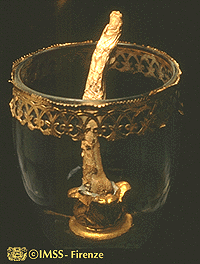 The BBC this week is covering how the
 in Florence has enhanced their Galileo collection:


 . The Committee on Fortifications approved of Baroillet’s Kinographe, but offered no precise description of the Kinographe device which, naturally, had to be kept secret.

 ” video explains layered texts with two examples, the Hebrew Bible and Anchor Yale Bible Dictionary:


 Relationships between persons depend upon the art of listening. Listening to music, poetry, and even works of art is deeply personal. The same is true for books. The act of reading is listening.
 Lewis and Tolkien thus became eternal companions, friends who have shaped my way of being forevermore. I cannot imagine who I would be were it not for their books. My identity as a person is thoroughly intertwined with their writings. I could say the same about Francis Schaeffer.


