Galileo’s World OU Speakers Series

Originally posted at ouhos.org, the now-discontinued blog of the OU History of Science Collections. Neither this post nor any of its content should be taken as an official communication of the University of Oklahoma.


Free public presentations at 7 p.m. on the 2nd Thursdays each month, each followed by a public skywatch on the Sam Noble Museum lawn hosted by the Lunar Sooners and Astronomy Prof. Muk Kilic. This OU Speakers Series features faculty expertise and student participation in Galileo’s World on the OU campus.

  • January 14: The Story behind the Leaning Tower of Pisa replica. Panel presentation, College of Engineering.
  • February 11: The Story behind “The Quest for Other Worlds” exhibit. Dr. Jared Buss, Department of the History of Science.
  • March 10: “Celestial Spheres and Torrid Zones: Medieval and Renaissance Views of the Cosmos,” Dr. Peter Barker and Dr. Kathleen Crowther, Department of the History of Science.
  • April 14: “The telescope and the scientific revolution: Looking at the world with new eyes,” Dr. Rienk Vermij, Department of the History of Science.

Consult the exhibit website, Galileo’s World Events, for more information.

Posted in History of Science | Leave a comment

Galileo’s World spring 2016 events

Originally posted at ouhos.org, the now-discontinued blog of the OU History of Science Collections. Neither this post nor any of its content should be taken as an official communication of the University of Oklahoma.


Hold the date:

Changing of exhibits:

Galileo’s World Speakers Series at the Sam Noble
(7 p.m. on 2nd Thursdays each month, with Skywatch afterward hosted by the Lunar Sooners):

  • January 14: The Story behind the Tower of Pisa exhibit, College of Engineering.
  • February 11: The Story behind “The Quest for Other Worlds” exhibit, Jared Buss.
  • March 10: “Celestial Spheres and Torrid Zones: Medieval and Renaissance Views of the Cosmos,” Peter Barker and Kathleen Crowther.
  • April 14: “The telescope and the scientific revolution. Looking at the world with new eyes,” Rienk Vermij.

Galileo’s World Speakers Series at the National Weather Center
(7 p.m. on 1st Tuesdays each month, featuring JPL scientists, with food and reception at 6:30 p.m.):

Special events:

  • Galileo’s World Symposium, Feb 25, 2016: 9:30 a.m. to 5 p.m. (free lunch included with RSVP)
    • Paolo Galluzzi (Museo Galileo): The Galileo//thec@ Digital research library
    • Bro. Guy Consolmagno (Vatican Observatory), Galileo as Scientist
    • Theresa Marks (OU College of Engineering), The OU Leaning Tower of Pisa replica project
    • Nick Wilding (Georgia State University), “Forging the Moon: or, How to Spot a Fake Galileo”
    • Tony Hey (VP of Microsoft Research Connections, a division of Microsoft Research, until 2014), The Nature of Innovation
  • Midwest Junto for the History of Science, April 1-3, 2016.

Galileo’s World reprise exhibits:
September 2016 through May 2017 (Bizzell Library, 5th floor).

Events subject to change. Consult the Galileo’s World Events (exhibit website) for more information.

Posted in History of Science | Leave a comment

Two new exhibits on Space are now open

Originally posted at ouhos.org, the now-discontinued blog of the OU History of Science Collections. Neither this post nor any of its content should be taken as an official communication of the University of Oklahoma.


Kerr rocketThe Carl Albert Center of the University of Oklahoma has launched a new exhibition, “Rockets’ Red Glare: Robert Kerr and the Space.”

View the exhibit both online and in person at Monnett Hall on the north oval of the OU campus. A website, Oklahoma and the Space Race, also displays a collection of Kerr’s Space and Aeronautics Memorabilia along with speeches and other archival material. Special thanks to Nathan Gerth and the archives staff for their creation of this exhibit, and to Mike Crespin and Cindy Rosenthal for including the Carl Albert Center in the Galileo’s World initiative.

The Carl Albert exhibit is a perfect complement to the Oklahomans and Space exhibit curated by Bill Moore, now open at the National Weather Center. Aviators, astronauts, scientists and engineers from Oklahoma have participated in aerospace activities throughout the history of the state. This special exhibit explores how the pioneering spirit that brought space scientists to Oklahoma also inspired them to explore the new frontier of space. It is based on the book by Bill Moore, Oklahomans and Space (Oklahoma Historical Society, 2011).

OkiesSpace2

Posted in History of Science | Leave a comment

Galileo’s World opens at Sam Noble

Originally posted at ouhos.org, the now-discontinued blog of the OU History of Science Collections. Neither this post nor any of its content should be taken as an official communication of the University of Oklahoma.


Galileo’s World is upon us… The first Galileo’s World exhibit opened Saturday, August 1st, at the Sam Noble Oklahoma Museum of Natural History!

The joint-exhibit, Through the Eyes of the Lynx: Galileo, Natural History and the Americas, will run Aug. 1 – Jan. 18, 2016.

This exhibit explores the question: “How did the natural knowledge of Native Americans shape European science in the age of Galileo?”

GW SN 3

The focal point of this exhibit is the natural history of Mexico by Francisco Hernandez, published by Galileo and his colleagues in the Academy of the Lynx. Through this work, Native American knowledge of plants and animals became part of mainstream European biology. Galileo’s world extended far beyond Italy to include the western hemisphere. Natural history became transformed into a global endeavor.

Check out “FRANCISCO HERNANDEZ: THE COOLEST EXPLORER YOU’VE NEVER HEARD OF”, a report of this exhibit by Cara Giaimo on the Atlas Obscura news site (a “definitive guide to the world’s wondrous and curious places”).

GW SN 1

GW SN 2

Background

The king of Spain commissioned a physician, Francisco Hernandez, to compile Native American plant and animal knowledge. Beginning in 1571, Hernandez worked closely with Aztec artists and physicians in central Mexico. This work resulted in a massive, multi-volume set of notes, with painted illustrations, describing thousands of animals and plants unknown to most of the world.

An Italian nobleman, Federigo Cesi, founded the Academy of the Lynx (Accademia dei Lincei), one of the earliest scientific societies. Publishing a definitive edition of the manuscript of Hernandez comprised the central, albeit elusive, goal of Cesi and the Academy of the Lynx. Galileo joined the ranks of the Lynx in 1611, bringing wide-ranging expertise in mathematics, engineering, literature, art and medicine. Soon he became their star member. Other members included some of the leading naturalists of the day. They worked together to publish a monumental natural history of the Americas based upon the manuscript Hernandez prepared for the king of Spain. The landmark project, finally accomplished in 1651, more than 70 years after Hernandez’ sojourn in central Mexico, symbolizes the transformation of natural history into a global endeavor.

In antiquity, the lynx was renowned for possessing sharp eyesight at night. Cesi believed that the eyes of the Academy of the Lynx would peer more deeply into the secrets of nature than ever before. Because of their work to publish Hernandez’ natural history of Mexico, the keen eyes of the Academy of the Lynx stretched the boundaries of European thought in the life sciences just as with Galileo’s discoveries in the physical sciences.

What you will see

The Lynx edition of Hernandez is on display in this exhibit, alongside specimens from the Sam Noble Museum and the Robert Bebb Herbarium of the OU Department of Biology.

Three Galileo first editions: The first edition of Galileo’s masterwork in physics, the Discourse on Two New Sciences (1636), finds its place in the exhibit because of its critique of giant tales, which provided a scientific constraint for assessing reports of strange creatures. This prized Galileo first edition is included alongside a little-known work of literary criticism by Galileo, Considerations on Tasso (first published in 1793). A third Galileo first edition is a pamphlet of letters to Cesi about the Academy of the Lynx.

Other original books include the first published edition of Aristotle’s biological works (1476); the natural histories of Aldrovandi and Topsell; early hand-colored printed herbals of Fuchs and Gerard, and other works in natural history by members of the Academy of the Lynx.

Join the conversation on Twitter

#galileosworld
#oulynx

—–

Co-curators: James Burnes, Carolyn Scearce, Jackson Pope, Tom Luczycki, Katrina Menard, Melissa Rickman, Kerry Magruder.
Posted in History of Science | Leave a comment

First thoughts on Inside Out

G1We saw Inside Out last night and loved it (as with everything from Pixar, including the adorable Lava short).

Inside Out provides a fresh vocabulary of concrete images for explaining who we are and how we feel.* Here are some first thoughts on why Inside Out offers so many great ways for kids and parents — or just about anyone (it’s not just a kids’ movie) — to more effectively talk about how they feel:

  • Even Joy cries.
  • Joy and Sadness work together and cannot be separated.
  • Fear is introduced in a positive light as Caution, and brings alertness, waking us up when necessary.
  • All emotions are necessary, not only Joy, Sadness and Fear, but also Anger and Disgust.
  • Emotional immaturity is when only one emotion has too much control (even Joy).
  • Joy goes astray when she tries to “fix” things.
  • Healing comes through Sadness.
  • Emotional maturity (a larger console) results when all the emotions work together.
  • To avoid feeling angry or sad or afraid is not the goal. Rather, the worst condition is when the emotions shut down (no power to the console).
  • Despite our differences, we’re all alike in this: Everyone has the same emotions.
  • The reality is inside, not how we appear on the surface.
    • Sometimes deep inside, forgotten altogether by our conscious minds.
  • Everyone is complex, more complex than they appear.

As Augustine wrote in the Confessions:

“Men go abroad to wonder at the heights of mountains, at the huge waves of the sea, at the long courses of the rivers, at the vast compass of the ocean, at the circular motions of the stars, and they pass by themselves without wondering.”

—–

* I wrote something similar here about the fantasies of George MacDonald and Paul Young.

Posted in Art-Music-Lit | 1 Comment

Communities of collaboration

Originally posted at ouhos.org, the now-discontinued blog of the OU History of Science Collections. Neither this post nor any of its content should be taken as an official communication of the University of Oklahoma.


Our thanks to Rob Reynolds and the NextThought team for their series on “The Power of Connections.” Here’s an excerpt from an interview on open access and “collaborative communities.” For more, see Rob’s Power of Connections blog.

Kerry Magruder and Rob Reynolds – Open Access from NextThought on Vimeo.

Kerry Magruder and Rob Reynolds discuss open access to learning materials

Posted in History of Science | Leave a comment

Collaborative communities

My thanks to Rob Reynolds and the NextThought team for his series on “The Power of Connections.” Here’s an excerpt from an interview with me on open access and “collaborative communities.” For more, see Rob’s Power of Connections blog.

Kerry Magruder and Rob Reynolds – Open Access from NextThought on Vimeo.

Kerry Magruder and Rob Reynolds discuss open access to learning materials

Posted in Education | 2 Comments

Song of Falling Leaves

by Susanna Joy Magruder

Listen to the song of falling leaves.
Observe with a hastening breath. for
Before the hour of their demise
Their faces shine with a burning sun;
Many jewels across the tumbling wind.
From a sulfur glazed fire,
To the fur of a brown-backed mouse.
Watch the hair of the trees, spiraling down,
To land in a pond with shining grace,
With hardly a ripple from where they touched,
To expose this meeting of untold life

Posted in Art-Music-Lit, Family | Tagged | Leave a comment

Announcing the Galileo’s World exhibition

Originally posted at ouhos.org, the now-discontinued blog of the OU History of Science Collections. Neither this post nor any of its content should be taken as an official communication of the University of Oklahoma.


Gw logoThe Galileo’s World exhibition brings worlds together, connecting the world of Galileo with the world of OU during the University’s 125th anniversary.

Beginning in August, 2015, the Galileo’s World exhibition will offer a once-in-a-lifetime opportunity to view a complete set of first editions of Galileo’s printed works. Four of the OU copies contain Galileo’s own handwriting. They will be joined by 300 matchless rare books and manuscripts and finely-crafted replicas of historical instruments, some provided by the Museo Galileo in Florence.

Consider these three stories of how Galileo’s World will bring worlds together:

Schreck
Johann Schreck was a friend of Galileo’s who assisted him during his telescopic observations. A few years later, Schreck went to China, where he wrote a work on engineering in Chinese. The OU copy incorporates Japanese revisions as well. OU students will discover much more to this story in the gallery on Galileo and China, where they will connect Galileo’s world with Chinese and Asian aspects of University life today.

Hernandez 2
Just as Galileo’s World brings together the worlds of OU and east Asia, so with the Americas. In the most important early natural history of America to be printed in Europe, Francesco Hernandez reported the plant and medical knowledge of the Aztecs of central Mexico. This work was regarded with such interest that Galileo and his colleagues in the Academy of the Lynx worked to finally publish it in 1651. Every OU student in a STEM field today will appreciate discovering that European progress in the life sciences, as far back as the scientific revolution, directly depended upon the natural knowledge of Native Americans.
Hernandez c

Just as Galileo’s World brings together the worlds of Asia and the Americas, so it reaches through time to the Middle Ages and includes the Middle East. Selenographia, a massive book by Johann Hevelius, the leading telescopic observer of the mid-17th century, was the first comprehensive lunar atlas, published less than 40 years after Galileo’s telescopic discoveries.
Hevelius

On the frontispiece, Hevelius celebrates science as the heritage of many cultures. Here, in one of the most impressive works of the scientific revolution, Hevelius portrays Galileo in Middle Eastern dress as a tribute to the tradition of medieval Islamic optics.
Hevelius d

These three brief stories show how Galileo’s World brings together worlds as far removed as Asia, America and the Middle East.

Galileo’s World is an “exhibition without walls.” Beginning with Bizzell Memorial Library at the heart of the Norman campus, galleries in each major library, including the Bird Library and the Schusterman Library, will bring together the Norman, Oklahoma City, and Tulsa campuses.

Joint-exhibitions at the National Weather Center, the Fred Jones Jr. Museum of Art and the Sam Noble Oklahoma Museum of Natural History will engage visitors to these renowned museums and research centers.

Thanks to financial assistance provided by the OU Athletic Department, the University has acquired for the Galileo’s World exhibition an original Galileo-related manuscript by Oratio Grassi (1623), a beautiful work relating Renaissance art to Galileo and the telescope (Lorenzo Sirigatti, 1596), and the dialogue on ancient and modern music written by Galileo’s father, Vincenzo Galilei (1581). Coach Galileo will offer advice to the Sooners in a gallery located in Headington Hall, where athletes will strike the poses of the muscle men of Vesalius (1543) instead of only the Heisman trophy.

Vesalius muscle man

Galileo’s World will connect every academic program of the University, sustaining a multidisciplinary conversation that brings our worlds together across time and space. A portion of Tuscany was transplanted to the windswept plains of Oklahoma, and now the story of Galileo has become part of every student’s and researcher’s experience at OU. The interconnectedness of science and culture which characterized Galileo’s world, and which connects Galileo’s world to our own day, remains the common heritage of humanity which we explore across the University and beyond Oklahoma to the world.

See lynx-open-ed.org.

Posted in History of Science | Leave a comment

Watch not ESPN

Football connects across generations.

When they were young, my daughters and I used to enjoy gathering together precisely at 8 pm on Monday nights in time to belt out “Are you ready for some football?” together with Hank Williams, Jr. Then, as we watched together on the couch, I would try to point out the basic aspects of the game and, over the years, they developed an intelligent sense of what was going on.

We have also enjoyed the mega-spectacle of Sooners home games in Norman, filled with energy and excitement. Just as memorably, Dad used to take me to Bulldog games growing up. Each of my daughters have also enjoyed Bulldog games with him in the same small college stadium. Hannah performed the national anthem in sign language before homecoming one year. Mmmm, nothing is quite as nice as hot chocolate and hot dogs to cut the chill, as the band plays and the Bulldogs move the football down the field.

Remarkably, so far as I can remember, my father and I have never missed watching football games together on New Years Day. Last year’s Sugar Bowl was so compelling that we had standing room only in Mother and Dad’s living room as the family gathered together. Even those of us who had seats were seldom using them, but rather yelling and shouting as the Sooners pulled out an upset for the ages over the super heavily favored Alabama squad. Indeed, I later watched the game over again, downloaded in HD from iTunes, at least 2 additional times during the past year.

But we are not watching football tonight. Despite our love of football, we are not day-in day-out sports fans, and therefore we are shut out of watching the first ever College Football Playoff Championship game this year. It is broadcast only on cable, while we receive our TV with a digital antenna in the attic that pulls down local stations and PBS in HD onto our iMac using eyeTV.

To invest in the hundreds of cable channels would not make financial sense for us, as we watch TV mainly for local weather and special live broadcast events. We select movies and television shows via Netflix (generally), iTunes (when HD offers added value), and youTube (it’s easy to spend an entire evening enjoying the Piano Guys or Studio C).

Tonight is the end of an era, the era of casual family football. The cable-only broadcast of tonight’s game is harmful for the future of the sport. From now on, families who are not sports junkies will no longer enjoy together in their own homes the end-of-season football games.

How long can football afford to sell its soul to cable providers? Cable providers will not unbundle channels like ESPN, and ESPN will not unbundle high-draw events such as tonight’s game. We would gladly purchase it through ESPN online or on our iPads, but it is unavailable from the ESPN website, even as pay-per-view. Nor does the Watch ESPN app provide an answer for us; through it, the game is available only to those who already subscribe to a cable provider. If we were sports junkies, we could subscribe to cable and receive all of the ESPN and other sports channels to our hearts content. But we only want to watch occasional or special games, as a family, not to have sports dominate our lives, nor to clutter our evenings with cable channels that we will never use.

With the playoff comes a schedule extended well into the new year. If the championship game were still broadcast over the holidays, we would gather at my parents’ home, for they have cable. But this is January 12, and they are more than 500 miles away.

But never mind. The girls are up to something in the other room. They won’t miss the game. They won’t remember the first college football playoff year. They will not find college football filled with vivid memories of the underdog Ducks and Buckeyes, who were never supposed to make it this far. For my family, tonight’s cable-only broadcast means good-bye, college football excitement. I think they’ve found a puzzle to work on; wonder if it might be a picture of a Wyoming landscape we might visit later this year…

Watch Not ESPN

Football once connected families across generations. Due to cable bundling of the most important college game of the year, now it does so no longer.

Posted in Family | Leave a comment

Peace 1914-2014

McCutcheon TrenchesIn Advent we are stirred to contemplate the mystery of the Incarnation in light of hope, peace, joy and love. This year, as we mark the centenary of the first world war, let us take hope by reflecting upon the elusive but inspiring peace experienced among many soldiers along the front lines on Christmas Day, 1914.

“My name is Francis Tollivar, in Liverpool I dwell…” So sings John McCutcheon in “Christmas in the Trenches,” his classic folk song about the Christmas truce of World War I . The song was released on McCutcheon’s Winter Solstice CD, one of our all-time top-ten Christmas albums featuring McCutcheon’s enduring songwriting and masterful hammered dulcimer arrangements. A few years ago, it inspired a storybook illustrated by Henri Sorensen.

This year, the story of the Christmas truce has even inspired a chocolate company:

Remarkably, this high-production quality video was released as a Christmas ad. The blue-wrapped chocolate bar featured in the film is being offered for sale this season at Sainsbury’s stores in England, with 100% of proceeds going to the Royal British Legion, to benefit armed forces families, past and present. Far from trivializing the nature of war, the video expresses the longing for peace in every human heart, the validation of which we celebrate in Advent. If I lived in England, I would be buying a lot of these, but unfortunately they’re not available online, so I’ll follow their example and wrap my own chocolate bars.

Sainsbury’s produced another video to accompany the Christmas ad, “The story behind our Christmas ad,” explaining the historical background of the Christmas truce:

A third video, “The making of our Christmas ad,” explains the care and detail that went into the production:

In this centenary year, a number of books have appeared which reflect on the significance of the war for shaping 20th century culture and intellectual life and, particularly, its implications for Christian belief. Profoundly impacted by the horror of the war, many writers (e.g., Karl Barth, Tolkien and Lewis) grappled their way to an escape from despair, imaginatively creating a vision of hope and peace that nourishes readers for the rest of the century, and for generations to come.

The story of the Christmas truce foreshadows the undaunted resiliency of Advent hope and peace, even after a century filled with wars and rumors of war.

Related links:

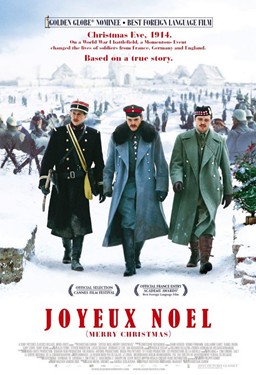
Brown 1914Weintraub SilentNight Joyeux Noel

—–

Update: Robin pointed out to me that the Royal Shakespeare Company is putting on a new play for families this Christmas season, The Christmas Truce. Here’s the trailer and synopsis:


Update #2: Prince William unveils a memorial to the WW1 truce, designed by ten-year-old Spencer Turner:

William ww1truce

Let’s slightly amend what Prince William said: “”Football [AND CHOCOLATE!] had the power to bring people together and break down barriers. It is vital that 100 years on we keep the Christmas truce story alive.”

—–

Here’s a reflection from Joseph Tkach on the Christmas truce and the advent of the Prince of Peace:

Posted in Holidays | Tagged | 1 Comment

Wolves in Yellowstone

Posted in Nature | Leave a comment