Pond Life

What are these insects doing?

This is a lesson plan for Unit 3: Pond Life (2 weeks).
Mix and match: rearrange the days around as much as you please; they don’t need to be done in the order listed below, or even at all. The most important thing is to become more aware of the life around you, in or near ponds and streams or elsewhere, and do/record/create something interesting in your nature journal.

  1. Tuesday & Wednesday: Pond Life: from “Observing and Collecting” (p. 27 in one edition) to the end of the book. If you divide this into four days, about a fourth of it on each day (Week 1 Tues, Wed, and Week 2 Tues and Wed). No LLS this unit.
  2. Thursday: Work in your nature journal. For ideas, read any sections in Comstock that relate to things that interest you in the Pond Life Golden Guide. For example, you might want to browse Comstock’s discussion of “Insects of the Brook and Pond.”
  3. Friday: Nature walk (and nature journal).

Relax, observe, create, discover, enjoy! Share your thoughts by email to the group or by commenting on this blog post.

Posted in Nature | Leave a comment

In memoriam: Steve Jobs, 1955-2011

“Remembering that I’ll be dead soon is the most important tool I’ve ever encountered to help me make the big choices in life. Because almost everything — all external expectations, all pride, all fear of embarrassment or failure — these things just fall away in the face of death, leaving only what is truly important. Remembering that you are going to die is the best way I know to avoid the trap of thinking you have something to lose. You are already naked. There is no reason not to follow your heart.”
— Steve Jobs, Stanford University commencement address, 2005

Steve Jobs

Apple

Thank you, Steve:

—–


“Now that he’s gone, I’m left feeling empty.
Never again will he walk out on stage.
He saw things we didn’t. He saw things clearly.
A prophet of technology has just passed away.”
Source: Song a Day. More by Jonathan Mann

Jonathan Mak
design by Jonathan Mak

The crazy one

Apple has posted a video of its October 19th celebration of Steve Jobs’ life, featuring moving and revealing reminiscences by Tim Cook, Bill Campbell, Al Gore, and Jony Ive (don’t miss!), and musical performances by Norah Jones and Coldplay. Watch the complete special event (1 hr 21 mins), filmed live at the Apple campus in Cupertino, here.

I preordered Walter Isaacson’s forthcoming biography from Amazon and also from the iBookstore. Update – consider this highly critical review by John Siracusa. John Gruber endorses Siracusa’s comments, saying: “I went into this podcast knowing that I thought the book was flawed, knowing that Siracusa did too, and expecting to be nodding my head in agreement with him throughout the show. But it’s worse than that. Isaacson blew it, a one-time opportunity forever squandered. Jobs picked the wrong guy.” Gruber elaborates here. Isaacson’s book is what you would expect from People magazine, not from a prize-winning biographer.

Posted in Apple | 4 Comments

Paper airplanes, bird wings

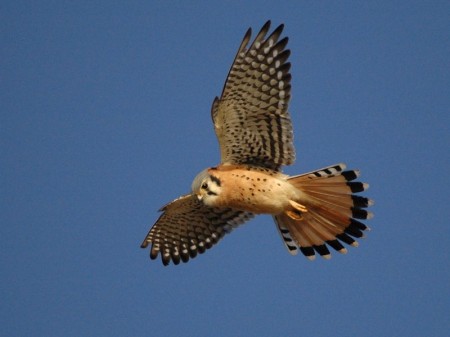
Bird flightCompare different paper airplane designs with the wings and flight of birds. What similarities in wing shape and flight pattern do you see? What features make a paper airplane more like a duck or goose than a falcon, or more like a swallow than an owl?

Paper airplane ideas:

Posted in Nature | Leave a comment

Classification

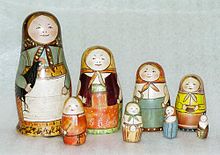
Animals and plants are classified in hierarchical groups, similar to nesting Matryoshka dolls placed within each other.

Babushka dolls

The biggest Matryoshka doll we’ll consider for now is “Kingdom.” Plants, animals and protists comprise different biological kingdoms. The smallest Matryoshka doll we’ll consider for now is the species. Between kingdoms and species there are 5 additional levels. For example, each kingdom is divided into phyla. All vertebrate animals are in the Chordata phylum.

Here is a list of each classification level from kingdom down to the species:

  • Kingdom
  • Phylum (pl. phyla)
  • Class
  • Order
  • Family
  • Genus (pl. genera)
  • species (pl. species)

It is good, practical advice to memorize these seven levels:

“kingdom, phylum, class, order, family, genus, species.”

Can you make up a memorable acronym to help you remember their order? Here’s one:

“King Phillip can only find green slippers.”

Can you come up with one you like better?

Common names are often inadequate, so biologists use scientific names instead. In England, some poet or storyteller might refer to the Robin with its red-breast, yet American readers may be interested to know that the American Robin is a different bird. The European Robin (below left) is Erithacus rubecula, and the American Robin (below right) is Turdus migratorius. Using scientific names does not often make for great poetry, but it does make clear which bird is intended.

European Robin American Robin

“Binomial nomenclature” means to name something with two names. The scientific name for any living thing is comprised of two parts: Genus + species. For example, the scientific name of the American Robin is Turdus migratorius. The Genus name (Turdus) begins in upper case, and the species name (migratorius) is indicated in all lower case.

Complete the worksheet below to see some examples of biological classification and binomial nomenclature.

Classification

Posted in Nature | Tagged | Leave a comment

Missouri School of Dentistry & Oral Health

Missouri School of Dentistry and Oral Health

Congratulations, Dad, to you and to all your amazing staff who worked so diligently and effectively to bring about the approval, by the ATSU Board of Trustees on Saturday, of a $26 million bond issue for constructing a new facility in Kirksville to host the new Missouri School of Dentistry and Oral Health. Thank you for investing so much effort and hard work to make a difference for Kirksville and countless others for future generations! I’m so proud of you, your staff, and the Board, and inspired by your selfless service. You are amazing!

Posted in Family | 3 Comments

Tolkien Quotes

Lisa Shafter, at The Traveling Mandolin, is at it again. I formerly linked to her intriguing accounts of her travels, but now she’s been writing a remarkable series of reflections on her favorite quotations from J.R.R. Tolkien. Check out A Cheerful Hobbit, Years and Years Afterward, Kindness, You knew, Hobbit Fashion, Though the End May Be Dark, Cast Away A Treasure (which reminds me of this hope-filled lament by one of Lisa’s friends), and others.

And the series is ongoing!

Thank you Lisa, for this wonderful collection of wisdom. You offer us a treasure house of glittering jewels, and not all of them are Tolkien’s.

Two roads diverged

Posted in Art-Music-Lit, Family | Tagged | Leave a comment

Synergy and life

One of the reasons I love birds is because they prove, for anyone who has eyes to see and ears to hear, the limitations of mechanistic philosophy and the impoverishment of reductionist perspectives in science.

Paul Klee, The Twittering Machine
Paul Klee, “The Twittering Machine”
(Die Zwitschermaschine, 1922). Museum of Modern Art, New York.

—–

“Like a flicker of light he had vanished with my eyes full on him, but without actually seeing even a premonitory wing beat. He was gone straight into that towering emptiness of light and crystal that my eyes could scarcely bear to penetrate. For another long moment there was silence. I could not see him. The light was too intense. Then from far up somewhere a cry came ringing down. I was young then and had seen little of the world, but when I heard that cry my heart turned over. It was not the cry of the hawk I had captured; for, by shifting my position against the sun, I was now seeing further up. Straight out of the sun’s eye, where she must have been soaring restlessly above us for untold hours, hurtled his mate. And from far up, ringing from peak to peak of the summits over us, came a cry of such unutterable and ecstatic joy that it sounds down across the years and tingles among the cups on my quiet breakfast table.

I am older now, and sleep less, and have seen most of what there is to see and am not very much impressed anymore, I suppose, by anything. ‘What Next in the Attributes of Machines?’ my morning headline runs…. All over the city the cogs in the hard, bright mechanisms have begun to turn. Figures move through computers, names are spelled out, a thoughtful machine selects the fingerprints of a wanted criminal from an array of thousands. In the laboratory an electronic mouse runs swiftly through a maze toward the cheese it can neither taste nor enjoy. On the second run it does better than a living mouse.

On the other hand… Ah, my mind takes up, on the other hand the machine does not bleed, ache, hang for hours in the empty sky in a torment of hope to learn the fate of another machine, nor does it cry out with joy nor dance in the air with the fierce passion of a bird. Far off, over a distance greater than space, that remote cry from the heart of heaven makes a faint buzzing among my breakfast dishes and passes on and away.”

– Loren Eiseley, “The Bird and the Machine” (in The Immense Journey)

Kestrel

—–

Klee’s paintings move me profoundly, and have so ever since I first encountered “The Twittering Machine” in high school or junior high. A few years ago in Munich I spent an afternoon viewing Paul Klee pieces at the Lenbachhaus. In my early junior high years, I remember being deeply moved by the first Loren Eiseley short story I encountered. Of all his writings, “The Bird and the Machine” quickly became my favorite. Whenever I stumble upon reductionist perspectives in science, my thoughts constantly go back to this short story, juxtaposed with a mental image of Klee’s “Die Zwitschermaschine,” and I am not even remotely tempted.

One of my father’s favorite words, “synergy,” means “the whole is greater than the sum of its parts.” Life is synergy. Life is like birds.

—–

Below: an old science assignment from back when I taught high school near St. Louis:

Loren Eiseley, Paul Klee

Posted in Art-Music-Lit, Nature | Tagged , , | 1 Comment

Don’t allow evil-mail to steal productivity

Yesterday my university Exchange account delivered no email, and a sense of unexpected, pervasive peace descended upon my office. I was strangely productive. Today Exchange is back to normal, so I’m playing catch-up, as seems often to be the case. So David sent me the following cartoon which, although it’s messy and distracting, actually conceals some good ideas for dealing with e(vil)mail. Maybe I’ll try to implement them tomorrow, but right now I’m desperately going through my inbox. Ugh – the tyranny of the urgent all over again.

Distractions

Source: Barry Ritholtz, The Big Picture – September 12th.

Posted in Technology | Leave a comment

Getting started with bird identification

Roger Tory Peterson, Field Guide to BirdsUse your copy of Peterson’s Field Guide to Birds (see previous introduction) to identify the bird described in each numbered question below. This exercise will help you become more familiar with the contents and layout of Peterson’s Guide.

Tip: Look up each bird listed below in Peterson’s Guide; then choose the bird which best fits each description.

  1. Which owl has a light colored, heart-shaped face, with no ear tufts?
    • Great Horned Owl
    • Screech Owl
    • Barn Owl
  2. Which type of tail does the mourning dove have?
    • Square tipped
    • Pointed
    • Deeply forked
    • Rounded
  3. Which woodpecker has a brown back, a white rump, and shows either golden yellow or salmon red under the wings in overhead flight?
    • Flicker
    • Downy
    • Hairy
  4. Which bird is swallow-tailed, with a cinnamon-brown breast?
    • Purple Martin
    • Cliff Swallow
    • Barn Swallow
    • Tree Swallow
  5. Which bird goes headfirst down a tree?
    • Blue Jay
    • Chickadee
    • Tufted Titmouse
    • Nuthatch
  6. Which bird is most remarkable in its song, which often mimics other birds or sounds? This grey bird also has conspicuous large white patches under the wings that are visible in overhead flight.
    • Wren
    • Thrasher
    • Mockingbird
    • Robin
  7. This common black bird was not originally native to America, but was introduced from Europe. In winter it is heavily speckled; in spring and summer its bill becomes yellow.
    • Waxwing
    • Red-winged Blackbird
    • Grackle
    • Starling
  8. What color is the female cardinal’s bill?
    • Red
    • Black
    • Yellow
    • Green
    • Purple
  9. Which male bird is yellow with a black cap and black markings on its wings?
    • Crossbill
    • American Goldfinch
    • Rufous Towhee
    • Song Sparrow
  10. Which bird has a long pointed tail, a scarlet face, and a white neck ring?
    • Evening Grosbeak
    • Indigo Bunting
    • White-throated Sparrow
    • Pheasant

Bonus: Name a bird that is nowhere listed above, as a possible answer, that you can identify. List one or two field marks that identify it, and note anything that you find interesting about it.

Posted in Education, Nature | Tagged , , | Leave a comment

Nature journal advice for perfectionists

“If a thing is worth doing, it’s worth doing badly.” – G.K. Chesterton

Perfectionist

Perfectionist

Posted in Education | Tagged , | Leave a comment

Christmas Bible Studies

Index of Christmas posts | Christmas Nights at Home


Posted in Family, Holidays | Tagged | Leave a comment

Christmas Fiction

Index of Christmas posts | Christmas Nights at Home


Favorite holiday fiction for leisure reading

Posted in Family, Holidays | Tagged | Leave a comment