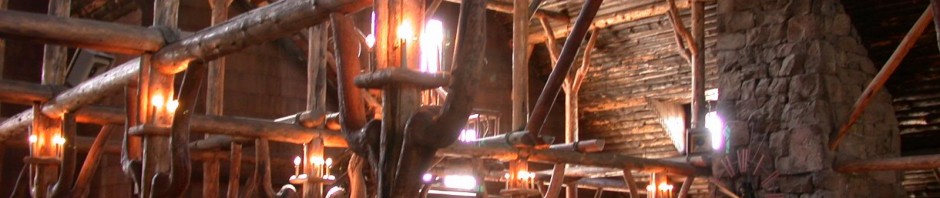
So great to see the George MacDonald Society flourishing with activities like this. Hopefully this is the first of what may become an annual gathering this time of year. Thanks to those who organized it, to Malcolm Guite for welcoming and sharing his poem, “Descent,” and for all the readers. At the heart of today’s event was a reading of MacDonald’s story, “The Gifts of the Child Christ,” published in Stephen Archer and Other Tales, 1883, with an illustrated ed. in 1981. It is a poignant tale of how we are here to learn to love, how suffering and grief may be redeemed toward that end, and how Christmas-time may help us in that ongoing task.
I think I might be weary of this day
That comes inevitably every year,
The same when I was young and strong and gay,
The same when I am old and growing sere—
I should grow weary of it every year
But that thou comest to me every day.
I shall grow weary if thou every day
But come to me, Lord of eternal life;
I shall grow weary thus to watch and pray,
For ever out of labour into strife;
Take everlasting house with me, my life,
And I shall be new-born this Christmas-day.
Thou art the Eternal Son, and born no day,
But ever he the Father, thou the Son;
I am his child, but being born alway—
How long, O Lord, how long till it be done? Be thou from endless years to years the Son— And I thy brother, new-born every day.
George MacDonald, Poetical Works (London: Chatto & Windus, 1893), vol. II, p. 210.
Last spring, Candace and I read aloud Malcolm Guite’s anthology, Word in the Wilderness: A Poem a Day for Lent and Easter. We found the poems deeply moving, and Malcolm’s essays opened them up for us both as literature and as theology. We plan to return to them again this coming year.
So this Advent, we are taking up Malcolm’s similar collection, Waiting on the Word: A Poem a Day for Advent, Christmas, and Epiphany. Each evening, if our schedules permit, we look forward to reading this aloud together. Malcolm often publishes the poems on his blog, so we listen to the audio file as he reads the poem for the night there, before we turn to read aloud the interpretative essay in the book.
Malcolm has a gift for selecting poems that are worth returning to over and over again, and for explicating them in ways that open up unexpected meanings of the season. The poets range from Christina Rossetti to Grevel Lindop, George Herbert to Ruth Pitter, Edmund Spenser to Luci Shaw, Alfred Lord Tennyson to Scott Cairns, among a host of others. Some are familiar favorites to us, some are new-found friends and companions.
These volumes now have become two of our most treasured books for reading at Christmas and Easter (cf. Christmas poetry to read aloud). We also keep Malcolm’s own books of poetry close by, as well as our volumes of Luci Shaw and Madeleine L’Engle.
Since we first encountered this song on John McCutcheon’s Winter Solstice album (1984; Apple Music), this has been one of our favorite Christmas songs. Here’s the Magruder Lassies version 😃. In the above music video by Ricky Skaggs, Keith Getty, and Kristyn Getty, I love the harmonies, the remarkable nature videography, and the fact that they sing all the verses!
Ricky Skaggs, Keith and Kristyn Getty, Brightest and Best (Apple Music)
“And in the end, the end is oceans and oceans of love and love again
We’ll see how the tears that have fallen
Were caught in the palms of the Giver of love and the Lover of all
And we’ll look back on these tears as old tales
‘Cause after the last tear falls there is love”
This song resonates with what we have learned from our friend Mercy. At the Thanksgiving meal this year, Rachel read aloud from one of Mercy’s poems that our healing comes… “in the middle of our hard, as we learn to know the heart of our Healer…” Mercy Tobin, “Our Healer’s Heart,” in Safe in His Arms, p. 118.
In the post Favorite family Christmas movies, one of the video shorts we mention there is this classic from 1945. We first discovered it as an extra on the DVD for Christmas in Connecticut (1945), a more familiar Christmas classic starring Barbara Stanwyck, Dennis Morgan, and Sydney Greenstreet. This lesser-known video is a heart-warming, Oscar-winning short video set in the old West inspired by the story of the magi (IMDB). Candace and I look forward to watching Star in the Night each year. Because it’s only 22 minutes long, it’s easy to fit in when we don’t have time for a longer Christmas activity. And now it’s on youTube, so we don’t have to fiddle with the DVD remote.
In this season of Advent, Candace and I are continuing to read aloud together the Pilgrim Year booklets by Steve Bell. Steve’s Introduction to the Advent booklet is nicely complemented this year by three 20-minute devotionals Steve recorded last year and posted to youTube this year.
Henry Van Dyke, The Lost Word (The De Vinne Press, Charles Scribner’s Sons, 1898)
One of my favorite Christmas stories is Henry Van Dyke, The Other Wise Man. Van Dyke writes with a mythic vision similar to George MacDonald, yet his prose is far more polished and his stories are dense with historical, geographical, and cultural detail. I highly recommend The Other Wise Man as a read-aloud on or near Epiphany.
But this year, in addition to The Other Wise Man, I picked up and read The Lost Word, a Christmas story that takes place in 4th century Antioch. Historical figures from Julian the Apostate to Chrysostom make an appearance, particularly Chrysostom during his years in Antioch (when he was known as John of Antioch) in 386–397. As with The Other Wise Man, the historical details are anything but pedantic, always serving the story, as in this excerpt from John of Antioch preaching in the basilica:
“Do thou, therefore, likewise… hasten to Bethlehem, the sweet house of spiritual bread. For though thou be but a shepherd, and come hither, thou shalt behold the young Child in an inn. Though thou be a king, and come not hither, thy purple robe shall profit thee nothing. Though thou be one of the wise men, this shall be no hindrance to thee. Only let thy coming be to honour and adore, with trembling joy, the Son of God, to whose name be glory, on this His birthday, and forever and ever.”
The prose is beautiful. Consider how Van Dyke conveys the time of day, for instance. Instead of stating “It was sunrise,” Van Dyke writes: “Overhead the mystery of daybreak was silently transfiguring the sky.”
The story amounts to a parable illustrating Andrew Peterson’s song, “Don’t you want to thank someone?” In the story, Hermas goes out into the garden with Athenais his beloved, and together they seek to give thanks. Athenais says:
“I, too, have felt it, Hermias, this burden, this need, this unsatisfied longing. I think I know what it means. It is gratitude — the language of the heart, the music of happiness. There is no perfect joy without gratitude. But we have never learned it, and the want of it troubles us.”
Hermas then prays:
“For all good gifts, for all perfect gifts, for love, for life, for the world, we praise, we bless, we thank —”
But their prayer falls to the ground, as the “lost word” is the name of the unknown One to whom they might give thanks. The story continues:
“As a soaring bird, struck by an arrow, falls headlong from the sky, so the song of Hermas fell.”
Oh, if only one could know the One to whom thanks is due! Knowing him by name would be the key to life.
Read The Lost Word aloud with a friend or family, if possible, anytime during the Thanksgiving and Christmas seasons. Then follow it up by listening to Andrew’s song, which takes the theme deeper. They are a powerful combination.
Read the story in an original 1898 edition, printed in crisp type, with artful woodcuts and illustrations on hand-made deckled paper by the De Vinne Press. Copies are not hard to come by; search AbeBooks or even Amazon, if there is no bookseller near you. Cf. more Van Dyke books at Favorite Christmas Storybooks.
In an interview with Neil De Grasse Tyson, Stephen Colbert similarly defended gratitude as the secret to the universe:
Galileo and the music of the spheres… love this new music video from Coldplay. Reminds me of my planetarium days. What if this were the opening act of a “Music of the Spheres” star show in a multimedia planetarium theater?
In this season of the liturgical year called Ordinary Time, Candace and I are reading aloud two books this year: Steve Bell, Ordinary Time, from his Pilgrim Year series; and Tish Harrison Warren, A Liturgy of the Ordinary (IVP, 2019). We’ve also ordered Julie Canlis, A Theology of the Ordinary (2017).
Steve Bell explains that Ordinary Time, coming at the end of the liturgical cycle, “is the season in which we come to realize the astonishing holiness of our daily lives as a consequence of all we have previously [experienced in the church year]… the daily is impregnated with the divine.” Steve then quotes one of my favorite novelists, so I had to go back and read the essay he cited. Here is a fuller version of the quotation, followed by a famous line from G. K. Chesterton:
“While no serious novelist knows for sure where his writing comes from, I have the strongest feeling that, whatever else the benefits of the Catholic faith, it is of particularly felicitous use to the novelist. Indeed, if one had to design a religion for novelists, I can think of no better. What distinguishes Judeo-Christianity in general from other world religions is its emphasis on the value of the individual person, its view of man as a creature in trouble, seeking to get out of it, and accordingly on the move. Add to this anthropology the special marks of the Catholic Church: the sacraments, especially the Eucharist, which, whatever else they do, confer the highest significance upon the ordinary things of this world, bread, wine, water, touch, breath, words, talking, listening — and what do you have? You have a man in a predicament and on the move in a real world of real things, a world which is a sacrament and a mystery; a pilgrim whose life is a searching and a finding.”
— Walker Percy, “The Holiness of the Ordinary,” in Signposts in a Strange Land (New York: The Noonday Press, 1991), pp. 369.
“Ordinary things are more valuable than extraordinary things; nay, they are more extraordinary.”
— G. K. Chesterton, Orthodoxy, ch. 4, “The Ethics of Elfland.”
I’m reminded that Ralph Wood argues that Sam Gamgee is the real hero of The Lord of the Rings. Wood is convinced that, if the Incarnation were to occur in Middle Earth – as an old sage once foresaw (cf. Morgoth’s Ring, p. 321) – Tolkien would have reported that God chose to enter the world not as a wizard nor even a human but as a hobbit.
— Ralph C. Wood, The Gospel According to Tolkien (Westminster John Knox Press, 2003), ch. 5.
This year I’ve enjoyed several Torrance-related conversations and activities, some related to the Reading Group hosted by Marty Folsom, others related to hosting the 2021 Workshop-Retreat, and soon the Firbush Retreat. In addition, there’s been progress on the Torrance Oral History project, with the posting of the manual online and preparation behind the scenes of the transcriptions. Here are some videos in reverse chronological order; a few other links or videos will be added later.
Interview by Gary Deddo for the You’re Included series, released January 2, 2022, in two parts, with the title “The Intersection of Faith and Science,” although it is largely autobiographical. It was recorded at the American Academy of Religion annual conference in San Diego in November of 2019.
Discussion with Andrew Torrance, on Methodological Naturalism; #2018-ABT-1.
Discussion with Ross Hastings, Echoes of Coinherence; #2017-WRH-1.
Discussion with Bruce Ritchie, T. F. Torrance in Recollection and Reappraisal, Firbush Retreat, Sept 2021.
Thomas F. Torrance, The Trinitarian Faith (#1988-489), ch. 2, “”Access to the Father” (#1988-489c); PDF handout. Marty Folsom discusses this chapter with Kerry Magruder.
Current Trends in Torrance Studies panel: Myk Habets, Jerome van Kuiken, Kerry Magruder (handout). August 1, 2021, closing session of the 2021 Workshop-Retreat.
Discussion with Marty Folsom, “John Macmurray’s Influence on Thomas F. Torrance,” Scottish Journal of Theology 71, 3 (2018): 339-358; #2018-MF-1.
Discussion with Travis Stevick, “The Function of Scientific Theory in the Thought of T. F. Torrance,” Participatio 7, Science, Epistemology, and Natural Theology (2017): 49-70; #2017-TMS-1.
Discussion with Derrick Peterson, Flat Earths and Fake Footnotes: The Strange Tale of How the Conflict of Science and Christianity was Written into History (Cascade Books, 2020); #2020-DP-1.
This Fourth of July weekend I read Nightmare Scenario: Inside the Trump Administration’s Response to the Pandemic That Changed History. I highly recommend it. The two authors, Yasmeen Abutaleb and Damian Paletta, are reporters for the Washington Post, and excerpts of the book have appeared there previously. The book weighs in at nearly 500 pages. It is investigative journalism focused exactly where we need it: on the creation of a first source-based comprehensive account of what actually happened with public health in 2020. I’m tempted to say it reads like a John Grisham novel, except every page provides the backstory to events we all-too-clearly remember!
I am happy how the backstory succeeds in humanizing some of the doctors I wasn’t sure about or had actually come to distrust: Deborah Birx, Robert Redfield, and Stephen Hahn. I now understand and appreciate their actions more than I could as an observer of headlines and press conferences “watching from a distance.” Not that they didn’t make mistakes (the same goes for Fauci), but the story of the four of them (including Fauci) working together against all the idiots is compelling. Unfortunately, it does nothing at all to rehabilitate any of the other major figures, including Alex Azar (HHS Secretary) or the White House.
“Nightmare scenario” refers to two levels: first, for pandemic planners, it is the scenario in which a viral pandemic arises with asymptomatic spread. Second, on another level, no one could plan for the eventuality that the epidemiological “nightmare scenario” would actually materialize under a political “nightmare scenario,” during an American presidential administration that cared only for politics and nothing for public health.
Redfield, director of the CDC, comes across in the book not as the conservative political activist I feared from his missteps early in the AIDs epidemic, but as a friendly grandfatherly figure who dedicated his life to public health and the care of marginalized and vulnerable people, inspired by John Paul II, but who was never cut out to be an administrator nor equipped for hardball politics. He would rather ask every security guard about their families than implement schemes to outmaneuver Kushner and Azar.
Similarly, I have much much more sympathy now for Birx, who worked in the White House itself, and for Hahn, the director of the FDA. Birx, Hahn, and Redfield were far more exposed to White House pressure than Fauci. Indeed, the three made a pact, which they made known, that if one of them was fired, the other two would resign in protest. And all four doctors, including Fauci, met weekly to keep each other in the loop, encourage one another, and coordinate their activities. The political interference and the public harassment all four endured is simply atrocious.
This is not the last word; it is a baseline upon which other accounts will be added. I can’t wait for the memoir of Francis Collins, for example. But Nightmare Scenario is an indispensable first account. It would be a gripping story, if only it were fiction.
Update 12/21: See William Saletan, “Sickening Decisions: A new congressional report shows how Donald Trump sabotaged the country’s early response to COVID” Slate, Dec 20, 2021.
Note: This page is now superseded by a new Wade Center Podcast Index at wadecenterpodcast.org.
For more information, check out the About page for that website.
This kerrysloft.com page will no longer be updated, and the index links here have been removed.
The Wade Center podcast was one of my favorites even before the pandemic. I never miss an episode. This page used to provide a list of the books discussed so far, at least of the podcasts devoted to a specific primary source by one of the seven writers. Regrettably, it excludes most episodes which are topical in nature or devoted to books by scholars, all of which are well worth listening to — download the entire back-catalog of episodes in your favorite podcast app! Subscribe to The Wade Center Podcast wherever you get your podcasts or listen on the Wade Center website.
The Wade Center Podcast, hosted by the Wade’s co-directors David and Crystal Downing, is a treasure trove of enthralling and insightful conversations about the seven authors the Wade collects: in addition to Lewis, J. R. R. Tolkien, Dorothy L. Sayers, Charles Williams, Owen Barfield, G. K. Chesterton, and George MacDonald. If you enjoy any of these writers, you will want to go back and listen through the archives of the Wade Center podcast!