Congratulations, Mother and Dad!

Mother and Dad this morning on their 57th wedding anniversary:

Mother and Dad, 57th wedding anniversary

You both look wonderful, and must be taking extremely good care of one another! Certainly, you are a tremendous blessing to all around you and all who know you. Thank you for loving one another with beauty and grace.

You are an amazing couple, and amazing parents! I love you more than words can say. Congratulations, and best wishes on this special day!

—–

Update: See Laura’s tribute. Ditto!

Posted in Family | 4 Comments

Passages

Update 4/2/2020: In Christianity Today, Steve Green agrees to repatriate an additional 11,500 items, and accepts past criticisms as “justified.” This article contains links to previous headlines regarding the Dead Sea Scroll forgeries, the papyri stolen from Oxford, and the repatriation of thousands of cuneiform tablets and other objects. “According to [chief curator Jeffrey] Kloha, the museum board ordered its staff to verify the provenance of all items in the museum’s collection in 2017, as well as all the items Green acquired that that never made it to the museum’s collection. Twenty curators and registrars worked for more than two years, checking documentation on the roughly 60,000 objects held in Washington, DC, and in a climate-controlled warehouse owned by Hobby Lobby in Oklahoma City…”


Update 3/9/2012: The Green collection is now at the Vatican; see this account at the National Catholic Register.

Note: The Passages speaker series DVDs can be purchased from mardel.com individually or as a set.

Update 10/20/2011: The Passages exhibit and speaker series has now closed in Oklahoma City and is on its way to Atlanta, GA, where it will again be accompanied by another speaker series.
—–
End of updates; regular post below.
—–

“Our goal is to make the Bible accessible like never before by enabling people of all interests to go behind the scenes of the most-banned, most-debated, best-selling book of all time.” -Steve Green

In celebration of 2011 as the 400th anniversary of the King James Version of the Bible, many institutions are hosting Bible exhibits this year – as I plan to do in the History of Science Collections in November and December. But from May 16 through October 16 at the Oklahoma City Museum of Art, the Passages exhibition is displaying select items from the remarkable Steve Green Collection. In this post, I’ll (1) note some highlights of the Green Collection, (2) offer a few tips for viewing the Passages Exhibition, and (3) applaud the scholarship represented in the free Speakers Series.

1. Green Collection

The Green Collection includes:

  • the 4th century biblical manuscript Codex Climaci Rescriptus,
  • numerous biblical manuscripts in Hebrew, Greek, Aramaic, Latin and other languages,
  • an undocumented copy of Wycliffe’s New Testament,
  • block books,
  • the book of Romans from a Gutenberg Bible,
  • many valuable early printed Bibles,
  • and more.

Green Collection, Codex Climaci Rescriptus
Codex Climaci Rescriptus
Photo courtesy of The Green Collection.

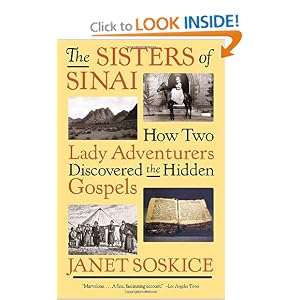
The Codex Climaci Rescriptus is an appropriate exemplar of the significance of the Green collection. Using a new technology developed by The Green Collection in collaboration with Oxford University, scholars have uncovered the earliest surviving New Testament written in Palestinian Aramaic – the language used in Jesus’ household – found on recycled parchment, under a later Syriac text, in this rare manuscript (video). The story of the 19th-century discovery of manuscripts at Saint Catherine’s monastery in the Sinai peninsula by two Scottish twins is told in a lively account which mentions this manuscript by Janet Soskice, Sisters at Sinai (NYT review; YouTube interview).

Janet Soskice, Sisters of Sinai

The Green Collection is already supporting research in collaborating universities, and through the Green Scholars Initiative is even being opened for undergraduate research to serve the next generation of scholars of ancient texts.

2. Passages Exhibit

I urge anyone interested in the history of the Bible and its role in western and world culture, or in the history of writing and the Printing Revolution, to see the selection of items from the Green Collection now on display in the Passages exhibit.

Torah scroll on gvil, 14th century
Torah scroll on gvil, 14th century,
Green Collection, on display in Passages

One of the most moving sections of the exhibit, for me, are the cases of Hebrew scrolls in the first room. These scrolls, of the Torah and of Esther, were meticulously created and maintained from generation to generation. They are frequently accompanied by beautiful and exquisitely crafted cases. Several scrolls on display came through the Spanish Inquisition and others survived the Nazi holocaust. Standing before these amazing Hebrew scrolls, I felt an overpowering sense of the presence of a cloud of witnesses preserving the Word of God through the generations in the face of all the world’s darkness. Multiply that times 10 – the “Synagogue” is but one of 11 rooms in the exhibit – and you have the impact of seeing Passages.

Here are three options for planning your visit, with the time requirements for each:

  • Half a day: Quickly browse the exhibit, read most of the labels, do some of the interactive activities (e.g, print a page of the Gutenberg Bible on a replica of his printing press), watch the animated mannequins (from Jerome to John Knox), watch the videos that introduce each room (e.g., a conversation between Erasmus, Luther and Eck). In half a day you should have time for pre-teens to complete the scavenger hunt, after which they can receive a free prize in the exhibit gift shop. Labels contain 2 or 3 sentences that summarize the significance and character of items on display, so many visitors will find the labels to be a sufficient guide to the exhibit. Try a half-day option if you have kids, then let all those who are patient enough to examine the items in more detail come back to learn more.
  • One day: At the entrance you will be offered an iPod touch with audio descriptions of each case and many individual items. To allow time to listen to the audio for many of the cases (but none of the individual items), schedule your visit for at least one full day. Take a generous break in the Museum cafeteria to discuss the exhibit over lunch.
  • Multiple days: To listen to all of the audio descriptions for every item, get the multi-day pass. The total audio length is about 10 hours. In two full days, with breaks for lunch, I was not able to read every label and listen to every audio. I plan to return!

The audio descriptions are informal recordings by Director Scott Carroll in which he points out features of the objects on display to examine more closely, and tells stories about the items, including their provenance and scholarly significance. Think of these delightful recordings as “fireside chats” or “conversations with the curator.” Carroll’s excitement over each object shines through these extemporaneous recordings with contagious delight, and conveys the motivation that compels a curator to learn so many languages and invest a lifetime in academic study of rare, historic artifacts. These audios include riveting stories and historical background. For example, don’t miss the audio description of the Codex Climaci Rescriptus, mentioned above. The Dead Sea Scrolls audio summarizes much of what you need to know to appreciate the Genesis fragment on display. Audio #1303 ranges from the Coptic origins of monasticism to a moving story of the first known codex (book). Audio #1601 describes how an English translation before Wycliffe, made for some Cistercian sisters, traveled through time to become incorporated word-for-word in some passages of the King James Bible in 1611. Audio #2602, describing Erasmus’ diglot of 1521, recounts the story of Luther’s reading of Romans 1 in Greek and how that text differed from the Latin Vulgate. The audios offer many more such stories about the items, their background, provenance and significance. I highly recommend listening to as many audio clips as you have time for.

By the way, even those who listen to the audio recordings will want to read the labels, for some label information is not included in the recordings. What worked best for me was to read the labels for each case, then listen to the audio for the case overview, and finally listen to the audio for select items within a case. To do this at a patient pace, room-by-room, plan on 3 days.

To help you pace yourself, print off a copy of this exhibit overview, which lists the 11 rooms of the exhibition. But don’t hurry – even the first two rooms, the Synagogue and Monastery, are by themselves worthy of a full day’s attention. To enjoy the wealth of material, plan ahead. As Rick Steves says, “Expect to return!”

A printed guide to the exhibition is available in the Museum gift shop for $25. It features descriptions of 100 items, often similar to the content of the audio recordings, accompanied by large full-color photographs. It’s a bargain if you want a place to keep notes, a way to keep track of some of what you’re viewing in the exhibit, or a prompt for discussion and sharing of your exhibit experience over lunch in the cafe. I highly recommend getting a copy on your first visit (or reading it over lunch even on your first day); it will help you make more efficient use of your time during your next visits.

Here’s map and parking info. Parking is $10/day on weekdays in a lot on the north side of the Museum (plastic accepted).

Tickets are required; if you want to listen to the audios, get the multi-day discount.

3. Speaker Series

No ticket is required, however, to attend the free Passages Speaker Series, which begins this week at the Oklahoma City Museum of Art and runs on intermittent Tuesday nights for several months. The exciting line-up of speakers is listed below, with links to some of their books. I plan to make every lecture, but if you miss a lecture, DVDs of the talks will be made available, so monitor the website for details.

“While movies like National Treasure, The Da Vinci Code and Indiana Jones tell of quests for fictional treasures, the real-life treasure hunters of the Green Scholars Initiative are uncovering new scientific mysteries in ancient biblical texts and manuscripts. The public will now get the rare opportunity to hear directly from these world-class experts at no cost.” – Jerry Pattengale, Director, Green Scholars Initiative

Seating is very limited, so call ahead to reserve tickets. To choose a decent seat, plan to arrive no later than 6 p.m. Act soon: Tickets for every week can be reserved now, and will not last long.

For more information about each of these speakers see the official schedule: Passages Speaker Series.

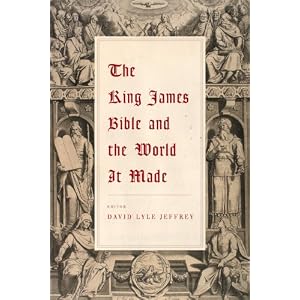
  1. July 19, 2011, David Lyle Jeffrey, “Beyond the Renaissance: Critical Texts and Bible Translation”
    David Lyle Jeffrey, People of the Book Jeffrey, King James Bible
  2. July 26, 2011, Peter Flint, “The Contents and Challenges of the Dead Sea Biblical Scrolls”
    The Meaning of the Dead Sea Scrolls
  3. August 9, 2011, Gordon Campbell, “The Making of a Bible Classic: The Translation of the King James Bible.” Cf. his similar youtube video here and here.
    Gordon Campbell, King James Bible
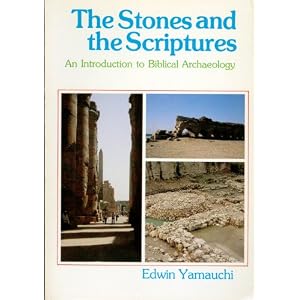
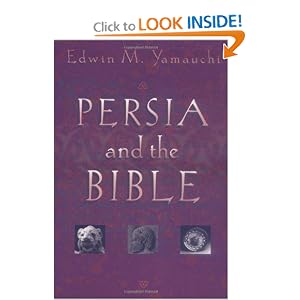
  4. August 16, 2011, Edwin Yamauchi, “The Greatest Archaeological Discoveries and the Old Testament”
    Edwin Yamauchi, The Stones and the Scriptures Edwin Yamauchi, Persia and the Bible
  5. August 23, 2011, Scott Carroll, “The Green Collection, Scientific Breakthroughs and Bible Translation.”
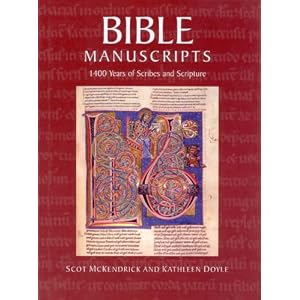
  6. September 6, 2011, Scot McKendrick, “Manuscript Discoveries and Bible Translation”
    Bible Manuscripts: 1400 Years of Scribes and Scripture http://ecx.images-amazon.com/images/I/51d29oILq8L._SL500_AA300_.jpg
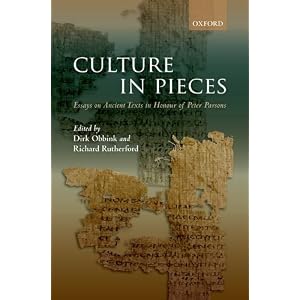
  7. September 13, 2011, Dirk Obbink, “Papyri Discoveries and Bible Translation”
    Culture in Pieces
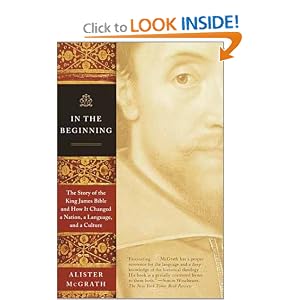
  8. September 20, 2011, Alister McGrath, “What Do William Tyndale and C. S. Lewis have in Common?”
    In the Beginning
  9. September 27, 2011, Ralph Hanna, “Richard Rolle’s Impact on the English Bible”
    Richard Rolle
  10. October 4, 2011, Jerry Pattengale, “Answers to New Theories Regarding How We Got the Bible”
  11. October 11, 2011, Robert E. Cooley, “The Greatest Archaeological Discoveries and the New Testament”

—–

UPDATE: The Museum Gift Shop now carries DVDs of the speakers, which include privately-recorded conversations with each scholar, and the Passages Exhibition Catalog ($25). Reading the catalog beforehand can make it easier to absorb all the information in the audio narrations, and even provide an ideal place to take notes as you go through the exhibit.

Posted in Theology | 4 Comments

iPhone distortion effects

Edible Apple has posted this intriguing photo of an airplane propeller taken with an iPhone 4:

Airplane propeller

Don’t miss Edible Apple’s explanation, and the accompanying vibrating guitar string video by YouTube user justkylevids. Amazing!

Posted in Apple | Leave a comment

MobileMe alternatives

Transitions

Change is a fact of life, and when anything is in the hands of Steve Jobs, change will happen sooner rather than later. His passionate desire to toss the old out the window, in the belief that death is life’s greatest change agent, is the characteristic I love most grudgingly about Apple. (Note to Windows-switchers: if you prefer stasis, better stick with Microsoft.)

I’ve been a happy user of MobileMe since it began as the free iTools service in January of 2000. As an Apple early adopter, I recognize that the new iCloud service is the future, and I want to go there yesterday. Most MobileMe features will be greatly enhanced in iCloud; nevertheless, I do regret giving up the aspects of MobileMe that are not making the transition. My iDisk holds some sites that many others have linked to and, if I dare say so, rely upon, particularly in education, so this transition is a bummer. For example, as of today, if you Google “history of science online,” my website for an online class is the top hit, outranking some impressive alternatives:

Hoso

But as of last night, I’ve moved my iDisk websites to kvmagruder.net (here’s my new History of Science Online). As a result, I’m sure this top ranking in Google won’t last much longer, but I’m willing to toss it out and accept the reality that the death of iDisk is an agent of change to make me rethink my web solutions from scratch, including going through all my old files and weed out the ones that should no longer be online. This will be a slow process, so the sooner it’s begun the better. Apple-flavored Kool-Aid may taste bitter at first but it goes down good. Once the process is completed, the solutions that I use will be better than iDisk and MobileMe, so I can see that Apple is making me take the medicine for my own benefit. Best of breed or bust.

MobileMe and iDisk Alternatives

Here are the alternatives I’ve settled upon for those features of MobileMe which won’t make the transition to iCloud:

Web host: I use iDisk to share files, to host several different websites, and to hold photo galleries and video pages. To host my websites, I considered DreamHost, GoDaddy, BlueHost and Webfaction, among others. I’ve settled on BlueHost, which offers all the features I need at an affordable price. In addition to hosting websites, blogs, photo galleries exported from Aperture, and the like, I’m also looking forward to creating online exhibits on this website with Omeka and perhaps noodling around in Moodle or other wiki and discussion board software for my classes, which I could not have done with MobileMe. BlueHost is one of Omeka’s hosting suggestions. In addition, BlueHost prohibits adult sites, whereas most web hosts allow any content that is legal. Be sure to check out the helpful BlueHost tutorials. Cost: $4.95/month for 2 years.

FTP: I prefer an app to a web interface for ftp uploading, and since I’ll be using a file transfer app more often now, I’ve upgraded from CyberDuck, which is free and functional, to Transmit, which is faster and sports a more convenient UI ($34 at the Mac App store). See: Transmit tips.

File sharing: For file sharing, two iDisk replacements are Dropbox and Box.net. The box.net free account limits file sizes to 25MB, however, and I’m usually trying to share image-rich Keynote or Pages files larger than that, so I’m going with Dropbox, in addition to my BlueHost site. Cost: free; see tour.

Photo galleries: MobileMe alternatives are Picassa, Flickr, SmugMug and 500px. I’m going with Flickr because of its integration with iPhoto and Aperture. One-click publishing from my Mac and iPhone is really convenient. (Get the Flickr iPhone app.) For some purposes, however, I’ll export a web gallery from Aperture and upload it to my web host. I opted for Flickr Pro to host more photos and in order to make larger file sizes available – for my purposes, web quality images are not sufficient, and my photo gallery solution needs to allow others the option of downloading high quality images. Cost: $24.95/year.

Videos: Two MobileMe alternatives are YouTube and Vimeo. A deciding factor for me is OS X and iOS integration: both offer the convenience of one-click publishing direct from within iMovie. I’m going with Vimeo, and I opted for Vimeo Plus. Vimeo Plus features include: no ads, clean interface, high video quality, can change public/private status of a video, replace a video – see the Vimeo FAQ. (Get the Vimeo iPhone app.) Cost: $59.95/year.

Blogs: Some time ago I switched my blogs from iWeb to WordPress.com, so I had a head start on this transition. Whether one chooses Blogger or WordPress, either may be run for free on their sites or transferred to your own web host. I highly recommend MarsEdit for composing blog entries offline (cost: $39.99 at the Mac App store). In a couple months I’ll be moving my WordPress blogs over to my web host, which will support additional WordPress customizations (if you want help, check out the WordPress tutorials at Lynda.com). This blog has been changed from its old wordpress.com url to kerrysloft.com, and the other one is already at its own ouhos.org domain, so links will not be broken and the transition should appear seamless to visitors. Cost: free for simple blogs; or about $20 per domain name per year (including a privacy option).

Website design: iWeb was ideal for quickly and effortlessly laying out simple websites – even for publishing to a web hosted site instead of MobileMe. iWeb was also perfect for students creating their own semester projects. Nevertheless, iWeb’s days are numbered – you can’t buy a copy from the Mac App store. Therefore, because I don’t want to invest further effort and time in a deprecated solution, we’ll need to invest in a flexible iWeb-like website creation tool for family and daily use. There are times when Coda or Dreamweaver are overkill (I now only use the latter for legacy sites). Here are several potential iWeb alternatives:

All four have free trial versions, so check them out and see which one works best for you. Sandvox and RapidWeaver are the most iWeb like. I’m guessing that at some point over the coming year we’ll settle on RapidWeaver as our iWeb replacement.

So, while the true joys of iCloud will only arrive this fall, already I grudgingly thank Apple and Steve Jobs for forcing me to make the jump from MobileMe in these other areas. I will miss MobileMe’s simplicity, integration, and ease of use, yet these separate solutions are each better in their own way than their MobileMe equivalents, considered independently. The annual expense is more expensive than MobileMe because of the extra options I’ve chosen, and companion apps like Transit and MarsEdit add to the overall cost, but it could be worse. I do believe these alternatives will turn out to be more functional than their MobileMe equivalents, and despite the time involved to make the transition, they are not that difficult to set up now that I have settled on the pieces of the puzzle listed here.

—–

Posted in Apple, Technology | 1 Comment

Darwin on the emotions

Originally posted at ouhos.org, the now-discontinued blog of the OU History of Science Collections. Neither this post nor any of its content should be taken as an official communication of the University of Oklahoma.


Darwin@the Library info | Exhibit brochure (pdf)

In 1872, to illustrate continuities between humans and animals, Charles Darwin explored the expression of the emotions. Dogs have an amazing ability to convey emotions.

Darwin, Emotions (1872), dog

Cats, also, can be affectionate or savage.

Darwin, Emotion (1872), cat

Darwin, Emotion (1872), cat

Darwin described a chimpanzee as disappointed and sulky.

Darwin, Emotions (1872), chimpanzee

Darwin showed that the intricate muscles of the face enable humans and animals to express an astonishing variety of emotions.

Darwin, Emotions (1872), face

For example, the following heliotype (an early form of photography) from a psychiatric hospital in France showed how the expression of emotion could be imitated by applying electrodes to the facial muscles.

Darwin, Emotions (1872), heliotype

Darwin@the Library info | Exhibit brochure (pdf)

Posted in History of Science | Leave a comment

Darwin, Descent of Man (1871)

Originally posted at ouhos.org, the now-discontinued blog of the OU History of Science Collections. Neither this post nor any of its content should be taken as an official communication of the University of Oklahoma.


Darwin@the Library info | Exhibit brochure (pdf)

In 1871 Charles Darwin published a two-volume work which followed up on the brief aside in the Origin that his theory might throw light upon the origin of humans. In the Descent of Man he explored embryological resemblances between humans and other animals.

Darwin, Descent of Man (1871), vol. 1

Darwin also offered sexual selection as an additional form of natural selection to account for pronounced differences between the male and female (sexual dimorphism).

Darwin, Descent of Man (1871), vol. 1

Darwin admitted that the beautiful feather of the peacock gave him a headache. But with sexual selection, one might account for fancy tail feathers, after all, that seemed to be more for show than for function.

Darwin, Descent of Man (1871), vol. 2

Darwin, Descent of Man (1871), vol. 2

Darwin@the Library info | Exhibit brochure (pdf)

Posted in History of Science | Leave a comment

Darwin, Variation of Animals and Plants under Domestication

Originally posted at ouhos.org, the now-discontinued blog of the OU History of Science Collections. Neither this post nor any of its content should be taken as an official communication of the University of Oklahoma.


Darwin@the Library info | Exhibit brochure (pdf)

In a two-volume work, Darwin investigated the degree of variation evident in domesticated animals. For example, the Rock pigeon was the parent form of all domesticated pigeons. It had given rise to the pouter pigeon, carrier pigeon, fantail pigeon, African owl pigeon and the short-faced tumbler pigeon.

Darwin, Variation (1868).  Rock pigeon.
Rock pigeon

Darwin, Variation (1868).  English pouter pigeon.
English pouter pigeon

Darwin, Variation (1868).  English fantail pigeon.
English fantail pigeon

Domestic breeding illustrated Darwin’s argument that the variation present in nature provides ample material upon which natural selection might work.

Darwin@the Library info | Exhibit brochure (pdf)

Posted in History of Science | Leave a comment

Why I like Columbo

In memoriam: Peter Falk (September 16, 1927 – June 23, 2011)

Peter Falk, Columbo

In recent months, I’ve watched a fair number of Columbo episodes, starring Peter Falk, available on DVD and through Netflix. I well remember enjoying them when they first aired, and the opportunity to watch many of them again has been a delight. For example, I identify with Columbo’s backfiring 1959 Peugeot 403 convertible as I drive my 1986 Subaru Brat to work. I like his continual references to his wife. He never boasts. Although apparently absent-minded, he has an uncanny eye for detail. He ignores confining social conventions, but he is always ready to apologize. He wears a disheveled raincoat. He listens. He always has one more question to unsettle his quarry – or better, to lead the perpetrator to confession.

On one level, I enjoy a mystery because of its puzzle-solving aspect. Solving a whodunnit is an adult form of recreation akin to working through Encyclopedia Brown stories as a kid. Columbo episodes excel in this appeal to the intellect, even though the viewer invariably knows the identity of the murderer from the beginning. In what I call The Columbo Principle, Falk hones in on some small detail that others dismiss as trivial. He winds up showing that the apparently trivial detail that didn’t fit the obvious conclusion holds the key to understanding the real murder scenario. I find this to be a fundamental principle of epistemology: we can never have confidence that we understand another person, the past, or any subject area, until the trivial anomalies finally make sense (#5 on this list).

However, to explain the appeal of mysteries merely as brain teasers would be superficial. Mysteries reinforce a sense of justice, and this is their deeper appeal. They affirm the reality of a moral order and offer hope for the oppressed. The cruelest oppression is to call evil good, and good evil, and thus to deny that injustice has even occurred at all – like a crime that goes undetected. From the standpoint of justice, a solved mystery is one form of the “happy ending” in a fallen world. By inculcating moral clarity, therefore, mysteries as a genre offer hope and renew the courage of those who suffer wrongly at the hands of others. Columbo addresses this longing. In a larger perspective, mysteries like Columbo nourish Christian eschatological hope which anticipates the ultimate justice that will be achieved when the Prince of Peace comes and establishes his reign upon the earth.

But there is a third element in the mysteries I enjoy most, deepest of all and often overlooked, and that is mercy. To me, the mystery genre’s greatest appeal is the potential of these stories to nurture a more profound sense of mercy. Mercy is evident in the wisdom of Father Brown who solves crimes by means of the priestly habit of hearing confessions; that is, by placing himself in the confessor’s place and imagining how he himself would have been capable of committing the crime. We see mercy in the remorse – even physical illness – of Lord Peter Wimsey, whenever any murderer he identifies is remanded to face the justice of the courts. And mercy is evident in Jim Rockford’s stubborn refusal in practically every episode to abandon clients and friends who take advantage of him (e.g., Angel).

The reason I love Columbo is that he shows how mercy is greater than law. More than that, mercy is the very foundation of the law. Therefore, we reject any conception of law that sees law as prior to mercy, or which opposes law vs. mercy as if they were contradictory, or as if mercy were an exception to the law. Mercy is the very purpose and being of law.

—- (Theological interlude) —–

This element of mercy as an appeal of some mysteries is obscured by some theological perspectives which exalt law or justice as the supreme attribute of God. I’ve written before that it is a grave error to consider divine attributes in isolation. Just as it is illegitimate to consider God’s power apart from his love, so we enter great peril if we consider justice apart from mercy, or regard mercy as contrary to justice. For example, speaking of how we are to understand David’s professions in the Psalms that he loves God’s justice, Luther explained that some theologians have led us astray by considering justice in isolation from mercy:

“they wrongly explained that justice was the true judgment by which God condemns according to desert or judges unfavourably those who deserve it. They opposed to justice the mercy by which those who believe are saved. This explanation is most dangerous – besides the fact that it is wrong – for it arouses secret hatred against God and his justice. For who can love one who wills to deal with sinners according to his justice? Therefore, may you remember that the justice [or righteousness] of God is that by which we are justified, or, the gift of the forgiveness of sins. This justice in God is pleasing, for it makes God not a just judge, but a forgiving father who wills to make use of his justice not to condemn, but to justify and acquit sinners.”*

Luther’s insights were strangely lost by Protestant scholastics in the 17th century (both Lutheran and Reformed) who not only separated divine justice from divine mercy but placed them in opposition as legal abstractions. Yet in this passage, Luther himself kept justice and mercy together in the action and being of God by understanding the justice of God as his work of justifying sinners.

Similarly, Karl Barth explains that divine righteousness means to set right:

“Righteousness in the Old Testament sense is not the righteousness of the judge who makes the debtor pay, but the action of a judge who in the accused recognizes the wretch he wishes to help by putting him to rights. That is what righteousness means. Righteousness means setting right.” Dogmatics in Outline, “He descended into hell”

Simply put, a god of raw justice is not the Triune Christian God of persons in communion. The Christian gospel begins not with a legal abstraction of a supreme law-giver, but with Trinitarian communion. From all eternity, divine justice is clothed with mercy, a mercy that is greater than and the very foundation of the law. “For I desire mercy, not sacrifice” (Hosea 6:6). God’s very being is mercy. Mercy is not an exception to justice; rather, justice is one step in the establishment of mercy, a patient step toward the restoration of relationships. Justice is subordinate to mercy, issues from it and is qualified by it. Mercy is the basis of justice, and its true end. Mercy precedes and comprehends justice, in the same way that grace encompasses law.

Creation and redemption provide two illustrations of the priority of mercy:

  1. Creation: God created us in an act of sheer mercy. He was under no obligation to make us. We shroud our minds with vain presumption if we attempt by any moral means to repay the debt of our existence. Mercy is the origin and purpose of the created order. Where mercy is diminished, creation is marred; where mercy is increased, creation is restored.
  2. Redemption: All have sinned, and there is no distinction between us. We are all lawbreakers, consigned under mercy and commanded to delight in showing mercy to others just as we hope (and become confident) in the mercy that is shown to us. The Sermon on the Mount teaches that we all hold murder in our hearts, and as brothers of Cain we know there is a startlingly short distance from the heart to the hand. We stand in unbreakable solidarity with those who are judged, and consequently with those who receive mercy. Judgment casts us upon mercy as our only hope; the purpose of justice is mercy. The gospel of the Incarnation, the Baptism, and the Cross teaches us that God came to be with us in solidarity with our condition under judgment. The judge became our judgment to make his righteousness our own. This subordination of justice to mercy is offensive to us when we distinguish categorically between “good people” and “evildoers,” for then we deny that the line between good and evil runs deep within each of us. But justice is the child of mercy, and can never be rightly grasped or enacted apart from it. God is not a hangin’ judge; rather, he takes the initiative in sharing our distress and delivering us from our darkness and despair. The desire of his heart from all eternity is to be merciful to sinners, to justify the guilty, to make us right with him by sheer grace. Because of that eternal and unquenchable divine desire, mercy and justice reach their fullest expression together in the person and work of the Incarnate Christ.

My favorite mysteries help me contemplate afresh the theological mystery that justice is always clothed with mercy, that mercy is greater than law and its very being and purpose.**

—- (End of the theological interlude) —–

This theological background points to the deepest reason I enjoy watching Columbo. Columbo is remarkably gentle toward those he apprehends. This gentleness, expressed in a downright courtesy toward the murderers he exposes, conveys this sense of justice as operating within the bounds of a larger mercy. To me, this lies at the heart of Columbo’s appeal.

Here are two examples.

First, watch “Try and Catch Me” (season 7, episode 1), starring Ruth Gordon and Mariette Hartley. Ruth Gordon plays the part of Abigail Mitchell, an elderly woman who is an accomplished and best-selling mystery author, yet Columbo knows from the beginning that she has committed murder. When he appears at a luncheon where Mitchell is speaking, she unexpectedly calls him to the podium to explain his success as a detective. He complies, and expostulates:

“I talk better when this [taking a cigar out of his pocket] is lit. I didn’t expect anything like this. I came here, just like you, to enjoy the famous Abigail Mitchell. Uh… [lights cigar]… As for all that chemical stuff, I think Miss Mitchell was putting you on, because I don’t know anything about that. And about my work being ‘dark and frightening,’ I’ll tell you the truth: I’m not sure about that, either. I like my job. Oh, I like it a lot. And I’m not depressed by it. And I don’t think the world is full of criminals, or full of murderers, because it isn’t. It’s full of nice people, just like you. And if it wasn’t for my job, I wouldn’t be getting to meet you like this. And I’ll tell you something else. Even with some of the murderers that I meet, I even like them, too. Sometimes like them, and even respect them. Not for what they did, certainly not for that. But for that part of them which is intelligent, or funny, or just nice, because there’s niceness in everyone. A little bit, anyhow. You can take a cop’s word for it. Thank you, ladies.”

In practically every episode, Columbo’s demeanor reminds us that there are no “bad guys” who are fundamentally different from ourselves and need to be locked up at any cost. There’s a little bit of niceness in all of us and, likewise, we are all sinners in need of mercy. Mercy itself calls for correcting injustice and making all relationships right.

Next, watch “Swan Song” (Season 3, episode 8), starring Johnny Cash as Tommy Brown, a gospel singer who murders his wife. At the conclusion to this episode, Columbo waits for Brown alone on a mountaintop, late at night, to return to the scene of the crime. Brown asks him,

“Aren’t you afraid being alone up here with a killer?”

Columbo replies:

“No, sir. No, sir, I had the feeling that sooner or later…
[radio comes on playing Tommy Brown’s hit, “I saw the light”]
…sooner or later you would have confessed even if I hadn’t caught you… Any man who can sing like that can’t be all bad.”

Mercy nurtures confession, and confession is a first step in making relationships right. The only true justice is that which arises from and leads back toward mercy. This episode is all the more compelling because the music of Johnny Cash, like Columbo’s courtesy and gentleness, embodies the hope of God’s mercy for sinners in our darkest hour and direst need.

If more theologians would enjoy good mysteries, then more people would come to understand that God is more like Columbo apprehending a murderer with gentle mercy or Johnny Cash singing Folsom Prison Blues to inmates with heartfelt sympathy, than the fiery preacher of hellfire and damnation self-righteously heckling passers-by on the street corner.

—– Notes —–

* Thus Martin Luther, quoted by Barth, Church Dogmatics, II.1, p. 378.

** In describing mercy as the source, foundation and end of justice, I am indebted to Ralph Wood’s analysis of the virtues of justice and mercy in Tolkien’s Lord of the Rings (The Gospel According to Tolkien, pp. 96-99). I recommend no book about Tolkien’s imaginative vision more highly than this one. I’m also indebted to Karl Barth’s sermons to jailed inmates, Deliverance to the Captives (London, 1961) – to test whether any theologian has come to grips with the doctrine of grace, watch how he preaches to inmates (update: see *PPPS below); and Barth, Church Dogmatics II.1, ¶2, “The Mercy and Righteousness of God,” pp. 369-406, and II.2, ¶2 “The Judgment and Mercy of God,” pp. 206-233, particularly p. 16. These all make good reading while listening to the music of Johnny Cash.

PS: As I was writing this, Elmer Colyer appeared on You’re Included to discuss “Judgment and Grace,” which resonates well with these reflections. Download the video from the website or iTunes. A transcript and questions for reflection are provided. See also my discussion of the You’re Included videos of Jeff McSwain, which touch on some similar themes.

PPS: I just came across an excellent book by Steve Turner, The Man Called CASH: The Life, Love and Faith of an American Legend (2005). See this review by Lee Habib. Update 3/2017: New poems from Johnny Cash have been published by his son: Forever Words; excerpt here.

*PPPS: benjamin myers, salvation in my pocket: fragments of faith and theologyFor a brief yet sparkling gloss on Barth’s preaching to prisoners in story form, see Benjamin Myers, “Feast,” in Salvation in My Pocket (Eugene, Oregon: Cascade Books, 2013), pp. 48-50 (Amazon).

Posted in Theology | Tagged , , , , , | 8 Comments

Wedding reception

First post in this series: 25 years!

After the wedding at 8 a.m., we held a breakfast reception at the Traveler’s Hotel in Kirksville, MO.

Travelers Hotel

The wedding cake was a stack of pancakes and we toasted each other’s health with goblets of milk.

Cake and milk

Cutting the cake
More wedding photos

The following movie begins with the reception line, and concludes with the cutting of the cake:

Wedding reception, 1986 from Kerry Magruder on Vimeo.

Thanks to everyone who was able to share this memory with us! If you were there, I hope you will enjoy watching this video. We have much fun remembering your friendship and special care for us on that day. Our appreciation is undiminished through all these 25 years. Thanks to Sharon Burch, who worked with Candace and hosted Candace in her home during the weeks they made the wedding dress and the bridesmaids’ dresses (cf. scrapbook). Thanks to the entire wedding party for putting up with our idiosyncratic desires, and for getting up so early in the morning to make preparations! And especially, thanks to our parents who made all the arrangements for the rehearsal, the outdoor ceremony, the reception, and everything else!

Index of wedding posts: 25 years!

Posted in Family | Tagged | 2 Comments

Wedding scriptures

25 years!

Arise, my darling,
My beautiful one, and come with me.
See! The winter is past;
the rains are over and gone.
Flowers appear on the earth;
the season of singing has come,
the cooing of doves is heard in our land.
The fig tree forms its early fruit;
the blossoming vines spread their fragrance.
Arise, my darling;
My beautiful one, come with me.
(Song of Solomon 2:10-13)

Wedding program cover
Wedding program cover, calligraphy and background art by Michael Barfield

The reading of scriptures in our wedding 25 years ago, together with the special music, comprised one harmonious voice expressing the joy of marriage as creation’s dance in the morning of that very special summer solstice in 1986.

Just before the bridal procession, groomsman Allen Noel read the following verse from Solomon 6:10:

“Who is this that comes like the dawn,
Fair as the moon, bright as the sun,
Majestic as the stars in procession?”

The answer, of course, is Candace!

After nature had a chance to chime in with the song of a blackbird and Morning has Broken, Rhonda Barfield and Sharon Tait Burch alternated reading the following scriptures (watch):

Reading of Scriptures from Kerry Magruder on Vimeo.
(Watch entire wedding.)

Praise the LORD. Praise, O servants of the LORD, praise the name of the LORD. Let the name of the LORD be praised, both now and forevermore. From the rising of the sun to the place where it sets, the name of the LORD is to be praised. (Psalm 113:1–3)

The heavens declare the glory of God; the skies proclaim the work of his hands. Day after day they pour forth speech; night after night they display knowledge. There is no speech or language where their voice is not heard. Their music goes out into all the earth, like the sun to the ends of the world. For the sun comes forth from his pavilion like a bridegroom rejoicing to run his course. (Psalm 19:1–5)

The path of the righteous is like the first gleam of dawn, shining ever brighter till the full light of day. (Proverbs 4:18)

Let us know the Lord, let us press on to know the Lord. For his coming forth is as certain as the dawn. And he will come to us like the rain that waters the earth. (Hosea 6:3)

May they who love you be like the sun when it rises in its strength. (Judges 5:31)

My heart is steadfast, O God; I will sing and make music with all my soul. Awake, harp and lyre! I will awaken the dawn.” (Psalms 108:1–2)

My soul praises the Lord
and my spirit rejoices in God my Savior,
for the Mighty One has done great things for me –
holy is His Name.
(Luke 1: 46-49)

[Additional scriptures were read as part of the main ceremony.]

Diagram of summer solstice

Summer solstice, explanation
Explanation of summer solstice

(Winter Solstice)

25 years!

Posted in Family | Tagged , | 2 Comments

Wedding ceremony and vows

25 years!

Michael Parris conducted our wedding on the morning of summer solstice, 1986, in a ceremony written by Kerry and Michael. The text reproduced below begins at about the 24:20 mark of the wedding video, after the introductory music and scripture readings:

Wedding, 1986 from Kerry Magruder on Vimeo.

Dear friends, we are here this morning in the presence of God and in the loving fellowship of each other to share with Kerry and Candace this dawn of their new life together, their union as husband and wife.

Marriage was the first institution given for the welfare of the human race. When God created man He saw that it was not good for man to be alone. He made a helpmeet suitable for him and established the covenant of marriage.

Though Adam walked in total harmony with God, experiencing His undiminished glory, God made him to remain yet an incomplete image of his Creator alone. Man, being finite, yearns for a personal relationship with the infinite Creator, but also for the companionship of another creature whose finiteness would complement his own. In both man and woman together the image of God is revealed: male and female he created them, and pronounced: “it was very good.”

Originated in divine wisdom and goodness, designed to promote human happiness and holiness, the marriage covenant is the foundation of home life and social order, and so must remain till the end of time.

Marriage was commended of Paul to be honorable among all men. It is the second most important step in life; only salvation through Christ is greater. Therefore it should not be entered into unadvisedly or lightly, but reverently, discreetly, and in the fear of God.

You Kerry, and you Candace, have come to me with confidence in the call of God for union in marriage, and being assured that no legal, moral, or religious barriers hinder this proper union, I allow that if any man can show just cause why this union shall not take place, let him speak now or forever hold his peace.

Marriage was honored by the presence of Christ at the marriage feast in Cana of Galilee, and established by Him as an image or reflection of that great Day when the Bridegroom, adorned in all His glory, shall come for the Church, His Bride, purchased with His own blood, dressed in the spotless garment of His righteousness.

From the Bible we read these words:

“Submit to one another out of reverence for Christ.

Wives, submit to your husbands as to the Lord. For the husband is the head of the wife as Christ is the head of the church, his body. Now as the church submits to Christ, so also wives should submit to their husbands in everything. Husbands, love your wives, just as Christ loved the church and gave himself up for her to make her holy . . . and to present her to himself as a radiant church, without stain or wrinkle or any other blemish, but holy and blameless. In this same way, husbands ought to love their wives as their own bodies. He who loves his wife loves himself….

For this reason a man will leave his father and mother and be united to his wife, and the two will become one flesh. This is a profound mystery – but I am talking about Christ and the church. However, each one of you must love his wife as he loves himself, and the wife must respect her husband.” (Ephesians 5)

Many people spend a lifetime being self-centered. One challenge of life on earth is to escape the prison of self-centeredness. Jesus said,

“Whoever seeks to save his life shall lose it, but whoever loses his life for my sake shall find it.”

Kerry and Candace, it takes courage to lose your life for another. It’s not easy to let your guard down, to open your heart to reach with compassion when you’re tired or weary. But those who lose their lives, find life. The more you care, and the more intensely you care for one another, the more alive you become. Commit yourselves each day to care, to forgive, to make the first move in reconciliation toward one another. As Jesus commands:

“Love one another as I have loved you.”

Kerry and Candace, the union God now creates between you is a covenant that cannot be cancelled or revoked; more than a reciprocal agreement, it is initiated by your vows this day to die to yourselves and now live for each other. Only your love for God, the source of life and love Himself, should surpass your care for each other.

Kerry, God has entrusted to you the care of Candace, his daughter. Will you love and care for her as God loves her, relying on His grace?

I will.

Candace, God has entrusted to you the care of Kerry, his son. Will you love and care for him as God loves him, relying on His grace?

I will.

God has chosen you both to stand holy and blameless before Him when He returns, prepared as a beautiful Bride together with all the Church, ready for that marriage of consummate glory, the wedding of the Lamb, of which all our earthly joys and longings dimly testify. Kerry and Candace, God has ordained that through this marriage on earth, and your service for one another, Christ’s image in you shall grow to the completeness and holy beauty He desires on that Day.

Kerry and Candace, join your right hands and give heed to the vows you shall make to each other:

I receive you, Candace
as my wife
my dear beloved and beautiful one.
You are bone of my bone, and flesh of my flesh
so I forsake all others
to cleave only to you
I will love and cherish you
as Christ loves His Church
giving myself up for you
to lead you in holiness
with tenderness, honor, and respect
as heir with me of God’s gracious life
for better or for worse
for richer or for poorer
in sickness and in health
till death parts us
and we see the face of our Lord.

I receive you, Kerry
as my husband.
My lover, let your heart rejoice;
I am bone of your bone
and flesh of your flesh
so I forsake all others
to cleave only to you.
I will love and obey you
trusting in the Lord
as heir with you of God’s gracious life
for better or for worse
for richer or for poorer
in sickness and in health
till death parts us
and we see the face of our Lord.

Kerry and Candace, with this exchange of vows you are entering a covenant with each other, and with God. Though your way may not always be easy, God will walk with you to renew this union and sustain this covenant, so that together YOUR lives may demonstrate HIS life and glorify Him. Together know God and enjoy him forever, for a threefold cord is not easily broken.

As God gave the rainbow as a sign of his covenant with Noah, have you a sign of your promise?

[Kerry:]

“We have these rings.”

[Kerry and Candace take rings from David and Joyce, give to Mike.]

The ring is a symbol of the love Kerry and Candace have for each other. Its unending circle represents the eternal quality of your love, and the gold represents its purifying fire. As a ceaseless reminder of this hour, and as a seal of the vows you have taken, now give and receive your rings.

[Kerry, memorized:]

I give you my name
and this ring
to wear with joy
as a sign of my love and
vows before the Lord.

[Candace, memorized:]

I receive your name
and give you this ring
to wear with joy
as a sign of my love and
vows before the Lord.

[Kerry and Candace together, memorized:]

Wherever you go, I will go
Wherever you lodge, I will lodge
Your people will be my people
and your God my God.

“Love burns like a blazing fire, like a mighty flame. Many waters cannot quench love; rivers cannot wash it away. If one were to give all the wealth of his house for love, it would be utterly scorned.” (Song of Solomon)

“If I surrender my body to the flames, but have not love, I gain nothing. Love is patient and kind. It is never jealous or envious, boastful or proud. It is never haughty, selfish, or rude. Love does not demand its own way. It is not irritable or touchy. It does not hold grudges. Love does not delight in evil but rejoices with the truth. It always protects, always trusts, always hopes, always perseveres. Love never fails.” (1 Corinthians 13)

Kerry and Candace, it’s not a minister standing before you that makes your marriage real, but the covenant established in the presence of God. By the authority invested in me by the church, and the laws of this state and nation, in the name of the Father and the Son and the Holy Spirit, I take your hands in mine and acknowledge that you are indeed husband and wife!

Time of marriage
The exact time of this pronouncement, noted by Ken Turner: 8:42 and 50 seconds a.m.

[PRAYER, Jack Magruder]

The Lord in His grace will sustain this marriage covenant, and guarantee its bond. To turn from Him is to turn from life Himself. He will renew your love for one another as you daily look to Him, for He is the giver of all good and perfect gifts. And as the history of your life together now unfolds, God may entrust you with the gift of children for His care. Receive them as a precious heritage from the Lord, just as your parents received you. Be faithful stewards before the Father, to raise them in the light of His Word, and they will be blessings to you. Build your home firmly on the rock of trust in Him; and the covenant of the cross, sealed with Christ’s shed blood, will unite you in a bond of steadfast love that cannot be shaken, though the world may end.

Kerry, you may K I S S S S S your bride !!!!!!!

[Kerry and Candace kneel to take the Lord’s Supper. Music. Blessings from parents, flowers to mothers.]

You who witness these vows, will you support and uphold this marriage covenant sealed before you this morning? If so, say, ‘We will.”

[Congregation:]

“We will.”

May I present Mr. and Mrs. Kerry Magruder!

Mr. and Mrs. Kerry Magruder

Wedding ceremony

25 years!

Posted in Family | Tagged | 6 Comments

Marriage, creation’s dance

25 years!

On the morning of summer solstice in 1986, between Candace’s solo of “The Lord is My Shepherd” and Michael Barfield’s performance of “Season Suite” (see Wedding music), best man David Noble read the following reflections on Isaac and Rebecca, written by Kerry based on Genesis 24:

Reflections on Isaac and Rebecca from Kerry Magruder on Vimeo. Watch entire wedding.

Generation after generation has observed the order and beauty of creation, discerning in the ongoing dance of planets, sun and stars the Creator’s wise and generous hand, and so in our time we perceive in your coming together, Kerry and Candace, the movement of the Creator’s hand and the accomplishment of His will in your lives. You who have traveled two separate ways will leave here today to travel only one. We recognize with you that you were made for each other, bone of one bone and flesh of one flesh, fashioned as the Lord’s careful and loving gift. Be confident that it is He who directs you in what you do today. The Lord of the heavenly spheres is also the Creator of those who dwell in the earth, and He guides us as a faithful Shepherd, holding history in the hollow of his hand. Today we marvel together with you at his mighty work in your lives, for He has done great things for you; holy is His Name.

Isaac and Rebecca likewise committed themselves to the care of the Sovereign Lord, in confidence that He who first directed their paths together would be faithful to sustain their commitment to each other. As we read their story in Genesis 24, we find that their love for one another depended on God’s promises and direction in their lives, rather than on vague and uncertain fortune in a world of chance circumstance.

Abraham said:

“The Lord, the God of heaven, who brought me out of my father’s household and promised me on oath… He will send his angel before you so that you will find a wife for my son.” And to the servant sent to find her, God gave knowledge of his will, for “he worshiped the Lord, saying, ‘Praise be to the Lord, the God of Abraham, who has guided me in the right way to find this daughter for his son.'” Likewise Rebecca’s parents answered, “This is from the Lord; Rebecca is here before you; go and let her be the wife of Abraham’s son, as the Lord has spoken.”

Who today brings this daughter to stand beside this son?

(Junior Comstock replies: “Her mother and I.”)

Kerry and Candace, you have received the most important gift you will ever receive from your parents: the gift of life, which makes possible even the love that joins you as one today. The Father who gives life to us all therefore commands us to honor our parents, so to be rewarded with wisdom and long life on the earth. Now you will leave your parents to establish your home together, so be careful to care for them, to love them with renewed gratitude, and to honor them for their nurturing care for you from the moment of your creation.

Dear parents of the bride and groom, do you today testify, like the parents of Isaac and Rebecca, that this union is from the hand of the Sovereign Lord, and do you now send them to travel their own path together, as God leads them, and do you pledge to pray for them, and to support their marriage union as husband and wife?

If so, say, “We will.”

(We will)

The story continues, that

“Rebecca went on her way, and Isaac looked up and saw her approaching. So Isaac married Rebecca, and she became his wife, AND HE LOVED HER.”

With such a simple description is profound faith remembered: With nothing more than God’s direction in their lives to go on, they received one another and began to create their union as husband and wife. Kerry and Candace, know that love does not depend on a feeling or a fate that can slip away in this confusing world. Your faith in God grounds your love for each other in what will never pass away, the will of God, the Creator of suns, the Lord of history, the Shepherd of his sheep. In him go now, rejoice, begin to create your life together, confident in his call and presence, and your love will be a dance of beauty in this turning world.

25 years!

Posted in Family | Tagged , | 4 Comments